No products in the cart.

Menu
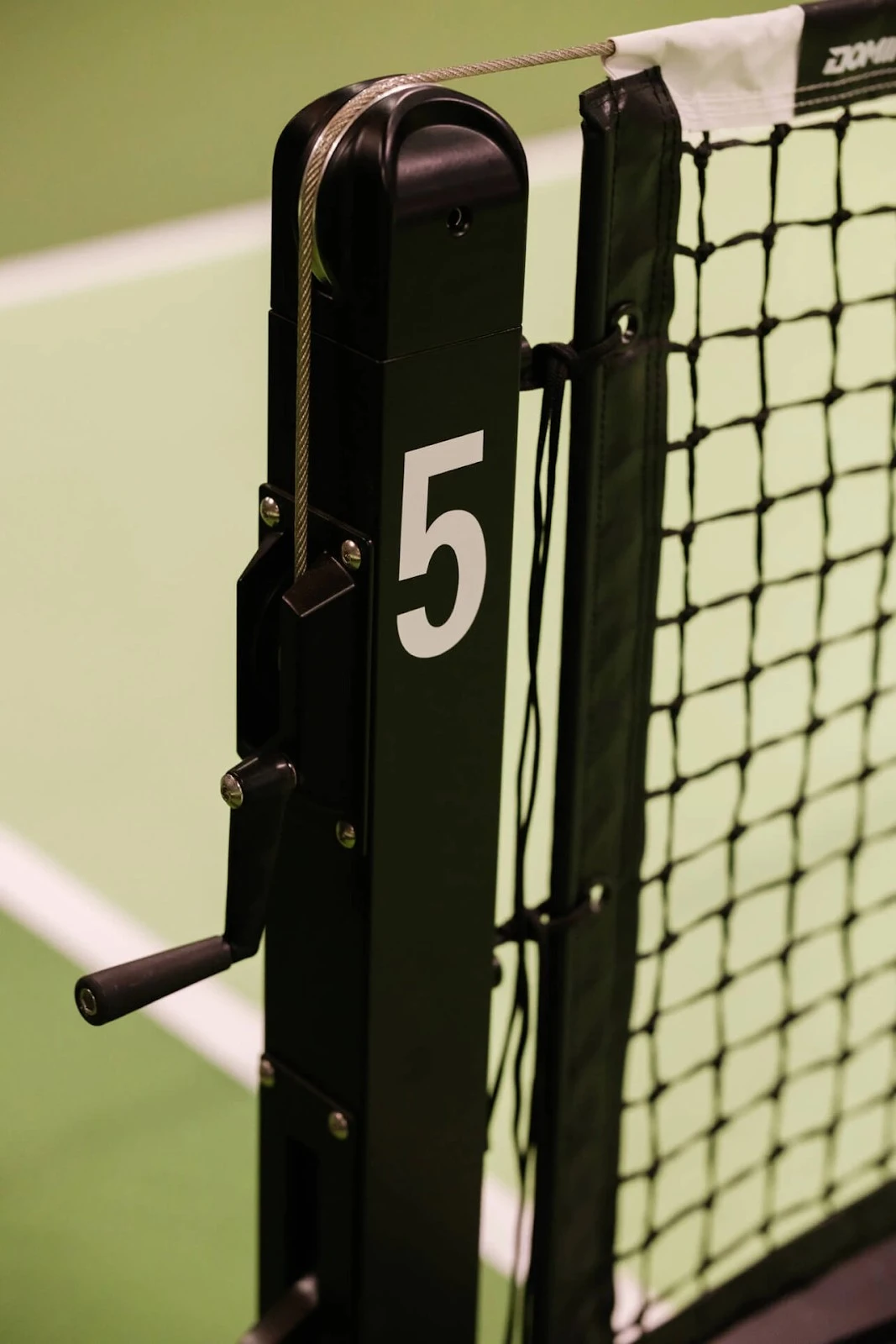
Understanding pickleball court rules in Australia is no longer optional for players who use public, shared, or indoor venues. As pickleball continues to expand across councils, schools, and multi-sport recreation centres, courts are increasingly shared with tennis, badminton, and futsal programs. This makes consistent rule awareness, scheduling discipline, and on-court behaviour critical for long-term access.
Unlike private clubs with fixed court ownership, most Australian players participate in environments where space, time blocks, and equipment are managed under shared-use agreements. In these settings, formal game rules alone are not enough. Players must also understand pickleball court etiquette, venue policies, and structured rotation systems to ensure fair access and sustainable growth.
This guide explains how pickleball court rules in Australia are applied in real playing environments, how open play pickleball rules typically operate, and how players can integrate smoothly into community-based courts.
From Sypik Australia’s perspective, improving rule awareness is not simply about compliance — it is about creating court environments that remain welcoming, efficient, and scalable as participation grows.
By supporting clubs and venue partners with practical court-management guidance, equipment selection, and structured onboarding resources, Sypik Australia actively encourages consistent playing standards that help new and existing communities operate smoothly, reduce on-court friction, and build sustainable indoor and shared-venue pickleball programs across Australia.
In Australia, the concept of pickleball court rules generally refers to two connected layers that operate together in most public and shared facilities. The first layer is the formal set of playing rules that govern serving procedures, scoring formats, the non-volley zone, and fault calls. These technical rules are aligned with internationally recognised standards and are adopted consistently by Australian associations, clubs, and organised programs.
The second layer consists of venue-specific pickleball court rules introduced by councils, schools, recreation centres, and private operators. These operational rules focus on how courts are accessed, shared, and managed rather than how the game itself is played.
In practical Australian playing environments, misunderstandings rarely come from the official pickleball court rules. They more commonly arise from the operational layer that controls how multiple user groups share the same space.
Most venues apply clear limits on how long a group may remain on a court during peak sessions to prevent crowding and long waiting periods. Facilities also define how players rotate in open sessions so that newcomers, social players, and organised groups can all access the courts fairly.
Beyond time management, many venues require players to follow specific pickleball court rules for storing nets, balls, and portable posts after each session. Courts are often reconfigured several times a day to accommodate different sports, so clear expectations around pack-down and setup are essential to maintain efficient scheduling and protect shared equipment.
Australian indoor and community venues usually specify pickleball court rules for how courts must be converted between sports such as badminton, futsal, and basketball. Players are expected to follow designated layouts, avoid moving line tape or portable posts without approval, and ensure that surface markings are not damaged during setup.
For players and clubs, respecting venue-level pickleball court rules is often more critical to long-term access than strict competitive rule enforcement. Venues that experience frequent delays, poor rotation discipline, or repeated surface damage are significantly less likely to prioritise pickleball when future programming schedules are reviewed.
From an operational perspective, Australian facility managers increasingly assess pickleball court rules and court behaviour patterns when deciding whether to expand pickleball time blocks, introduce additional sessions, or invest in permanent line installations. Reliable court conduct directly influences whether pickleball is perceived as an efficient and low-risk activity within multi-sport venues.
This is one of the areas where Sypik Australia works closely with clubs and venue coordinators to align player education with pickleball court rules and facility requirements. By helping organisers communicate operational expectations clearly and by supporting structured onboarding for new participants, Sypik Australia contributes to smoother integration of pickleball programs into existing recreation centre and community hall operations.
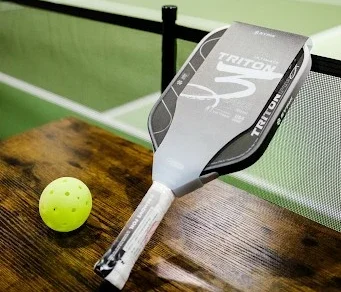
Open sessions are now the fastest-growing participation format across Australian pickleball communities. In most venues, open play refers to structured drop-in sessions where players rotate partners and opponents rather than registering as fixed teams. The central purpose of this format is to maximise access and court utilisation on shared pickleball courts, not to create ranking-based competition.
Because many Australian venues operate under short booking windows and shared-use agreements, pickleball court rules for open play have become a core operational mechanism that allows large groups to participate within limited time blocks.
In Australian shared facilities, open play environments usually follow simple but strictly applied pickleball court rules and rotation frameworks. Players are typically queued using paddle-racking systems or name boards, which visually indicate court order and prevent informal or disputed entries. Games are often played to a fixed point limit rather than a fixed match schedule, allowing predictable turnover and smoother flow between groups.
Automatic rotation after each game is common, regardless of the result, and social sessions frequently prioritise mixed-ability pairings to avoid skill-based segregation. This structure supports inclusive participation and allows newer players to integrate without needing formal assessment or classification.
The operational logic behind pickleball court rules for open play is based on equity of court access. When one group remains on court beyond the agreed rotation cycle, subsequent players immediately lose available playing time. In venues with limited court numbers, this quickly creates congestion around courtside areas and generates frustration between user groups.
For this reason, most Australian shared facilities apply first-in, first-out rotation models. During peak sessions, single-game stays are commonly enforced, and the next available court is allocated to paired players rather than individuals, ensuring faster turnover and reducing idle time between matches.
Rotation systems become particularly important in venues where pickleball operates alongside other sports and where session windows are tightly controlled by broader facility schedules. Without clear open-play pickleball rules, coordinators are forced to intervene frequently, which disrupts session rhythm and increases administrative burden.
Well-understood rotation frameworks allow session leaders to manage high player volumes without introducing formal competition structures. For players, these systems reduce uncertainty about when they will next play and remove the need for informal negotiation or court-side disputes.
In practice, players who adapt quickly to open rotation formats are more readily accepted into established Australian pickleball communities, even when skill levels differ significantly. Understanding how rotation works, when to queue, and how to exit courts efficiently signals respect for shared-use environments and for fellow participants.
Over time, consistent adherence to open play pickleball rules improves session flow, reduces social friction, and strengthens trust between clubs, venue operators, and casual players. This operational reliability is one of the key factors that allows open sessions to scale sustainably as participation continues to grow across Australia.
While formal rules define what is legal during play, pickleball court etiquette governs how players interact with each other, neighbouring courts, and the venue itself. In Australian multi-sport facilities, etiquette expectations are typically stricter than in single-sport clubs because courts are used consecutively by different programs and sporting codes.
In these environments, applying basic pickleball tips related to awareness, communication, and equipment handling plays a direct role in whether sessions run smoothly and whether pickleball is viewed as a cooperative activity by facility managers.
Across Australian councils, recreation centres, and school venues, a consistent set of etiquette behaviours is expected from players. These include minimising unnecessary noise during rallies on neighbouring courts, avoiding court entry while points are still in progress, maintaining clear walkways for spectators and participants, and keeping shared storage zones organised for nets, posts, and balls.
Line calls and fault disagreements are also expected to be resolved calmly and without escalating volume or disrupting adjacent courts. In shared halls, raised voices or prolonged disputes carry beyond a single court and affect the experience of multiple user groups.
From a practical perspective, good etiquette reduces operational delays. When players proactively dismantle portable nets, return balls, and clear equipment immediately after sessions, the next group can begin setup without requiring staff intervention. This is especially important in venues operating back-to-back bookings where only short transition windows exist between sports.
Poor transitions frequently cause session overruns, which then impact unrelated programs scheduled in the same hall. Over time, repeated delays are one of the primary operational reasons venues reconsider how much time they allocate to emerging sports such as pickleball.
From a community standpoint, etiquette directly shapes how pickleball is perceived by councils and venue operators. Facilities that observe respectful behaviour, efficient transitions, and cooperative player interactions are significantly more likely to continue allocating both indoor and outdoor space to pickleball activities.
In contrast, complaints related to noise, blocked walkways, or unresolved court disputes are regularly cited when shared facilities introduce tighter controls, reduced session durations, or more restrictive booking policies for pickleball programs.
For players entering new venues or joining unfamiliar groups, following simple court-side etiquette often matters as much as technical competence. Demonstrating awareness of surrounding courts, communicating clearly when retrieving balls, and handling equipment responsibly signals respect for shared space and established routines.
In practice, poor etiquette remains one of the most commonly reported reasons for restricting or restructuring pickleball access in shared Australian facilities. Consistent, visible application of basic behavioural standards is therefore not only a social expectation but a critical factor in protecting long-term access to multi-sport venues.
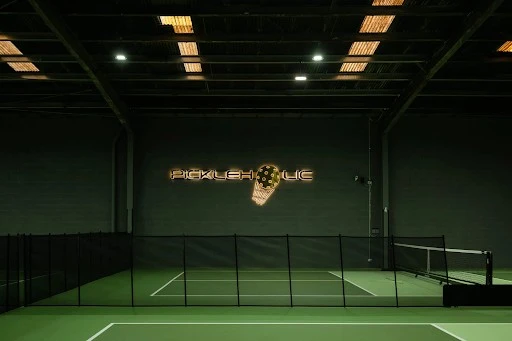
Public facilities introduce a distinct layer of pickleball court usage rules that differ substantially from private club environments. Most council-managed courts in Australia operate under formal booking and access frameworks designed to balance demand between multiple community sports and user groups. These policies exist to protect shared infrastructure while ensuring fair and transparent allocation of public space.
In practice, councils regulate court use through booking priority arrangements between sports, differentiated access for casual players and organised groups, defined peak and off-peak usage limits, and specific permissions for commercial or coached activities. As a result, even when a court appears physically available, pickleball players may not be authorised to occupy the space outside approved time blocks.
Many Australian councils now require advance online bookings for group sessions, the appointment of designated session coordinators for organised play, and compliance with surface protection and venue safety requirements. These measures allow facility managers to monitor usage patterns, manage liability, and coordinate transitions between different sports programs operating in the same space.
Courts adapted from tennis, basketball, or multipurpose hardcourt infrastructure frequently carry additional restrictions. These commonly relate to approved footwear, permitted net anchoring methods, and limitations on temporary surface markings. Such controls are implemented to prevent long-term surface damage and to ensure that the court remains compatible with multiple sporting formats.
Players and organisers who fail to follow formal pickleball court usage rules risk jeopardising future bookings for the entire group. In several Australian municipalities, repeated non-compliance has resulted in temporary suspension or reduction of pickleball allocations within council scheduling systems.
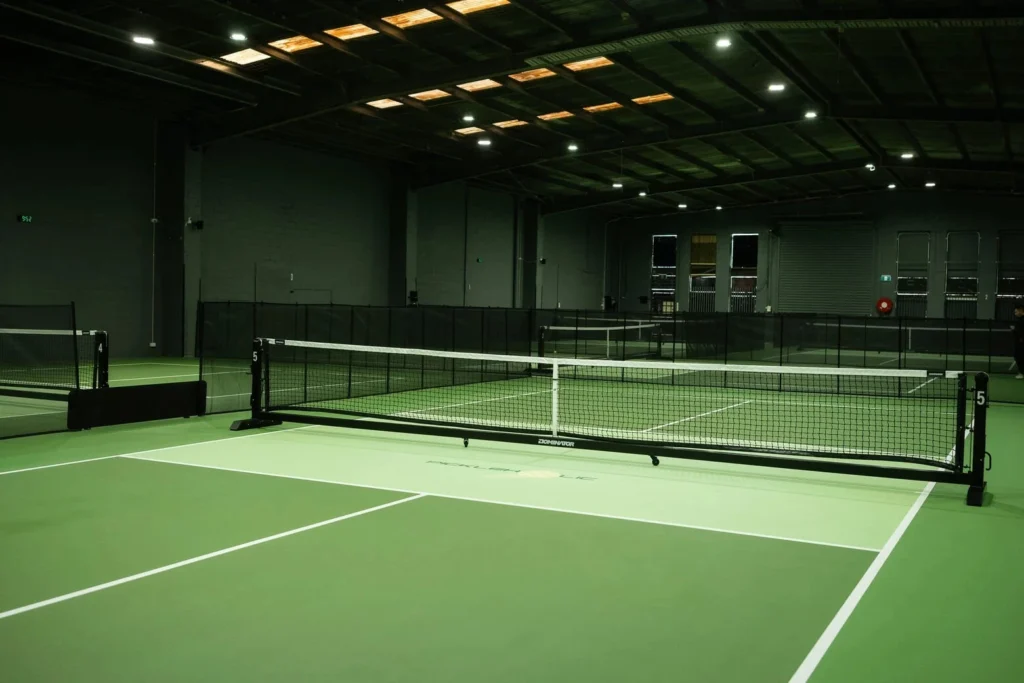
Indoor pickleball courts operate under tighter operational controls than outdoor courts because sessions must fit precisely into multi-sport timetables. Space sharing, staff supervision, and rapid changeovers make punctuality and compliance essential for ongoing access.
Most indoor venues require strict start and finish times, full pack-down after each session, designated storage locations for nets and balls, and approved footwear to protect indoor surfaces. These requirements ensure safe and efficient transitions between sports.
Fast and accurate court turnover is critical in indoor halls, as even small delays in net removal or equipment storage directly affect the next programmed activity. Reliable turnover is one of the main criteria venues use when evaluating indoor pickleball courts for future bookings.
Shared floor markings, lighting layouts, and divider curtain systems often require specific court configurations for pickleball. For this reason, many facilities introduce short orientation briefings to explain approved layouts and safe setup procedures.
Groups that consistently follow indoor-specific rules, complete pack-down on time, and store equipment correctly are more likely to secure repeat or expanded access to indoor pickleball courts. Strong operational behaviour directly supports the sustainability of indoor programs.
Behaviour expectations for new players
In Australian venues, beginner integration prioritises behavioural compliance such as following rotation systems, asking before joining booked courts, and respecting session segmentation over technical ability. Applying basic pickleball beginner tips helps maintain fair access and predictable court flow for all players.
Impact on session quality and community sustainability
When beginners follow venue procedures and on-court etiquette, coordinators can manage sessions more efficiently and minimise disruption. This directly supports stable participation, smoother rotations, and the long-term sustainability of shared pickleball programs.
Most Australian venues enforce operational rules covering portable net storage, ball collection procedures, surface protection during transport, and equipment damage reporting. These pickleball equipment standards are designed to prevent floor damage and minimise disruption between consecutive sport sessions.
Improper handling, such as dragging nets or stacking posts incorrectly, increases maintenance incidents and directly affects future booking approvals. Assigning setup leaders or equipment coordinators helps reduce delays, protect shared assets, and demonstrate reliable program management to venue operators.
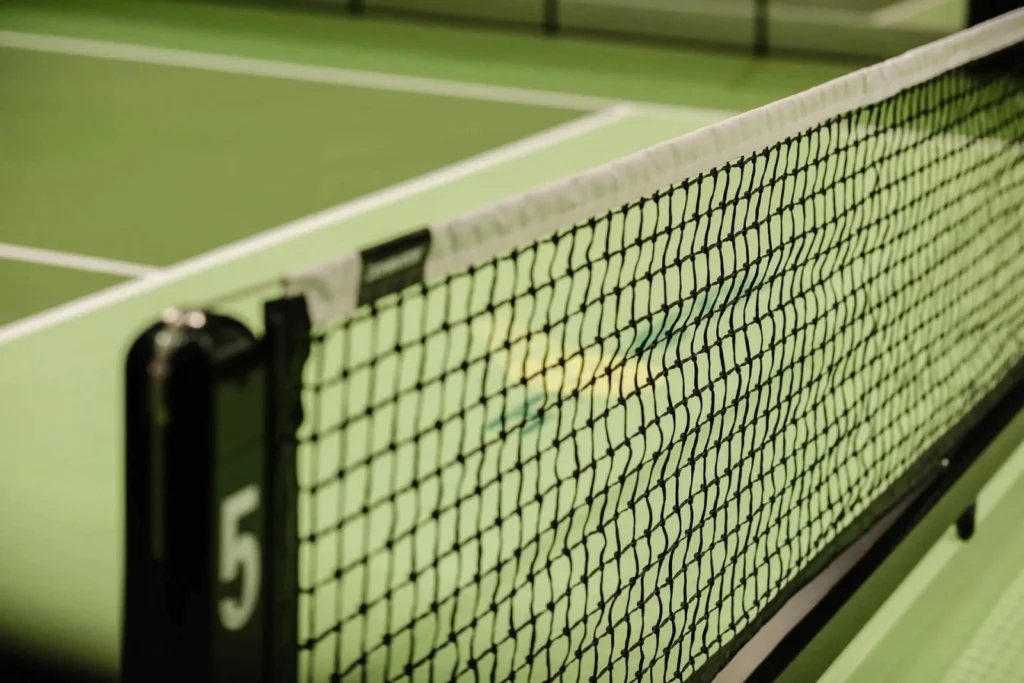
Understanding positioning rules, fault boundaries, and rotation procedures allows players to apply pickleball skills more accurately, especially for non-volley zone positioning, transition movement, and controlled serve placement in shared and space-limited courts.
In busy Australian venues, drills are often adjusted to reflect limited court time and open-play formats. Training that embeds rule-based constraints, such as short rally limits and rotation timing, improves session efficiency and better prepares players for real playing environments.
As pickleball participation grows across Australia, Sypik Australia works directly with community clubs, schools, universities, recreation centres, and social sport organisers to support structured and operationally compliant court programs.
Beyond supplying paddles and nets, Sypik Australia assists organisers with court setup workflows, equipment configuration, and player onboarding processes that align with venue policies and shared-court requirements.
The Sypik paddle range is designed to provide consistent contact feedback across indoor and outdoor surfaces, helping players transition between venues while reducing operational friction and supporting long-term, sustainable program delivery.
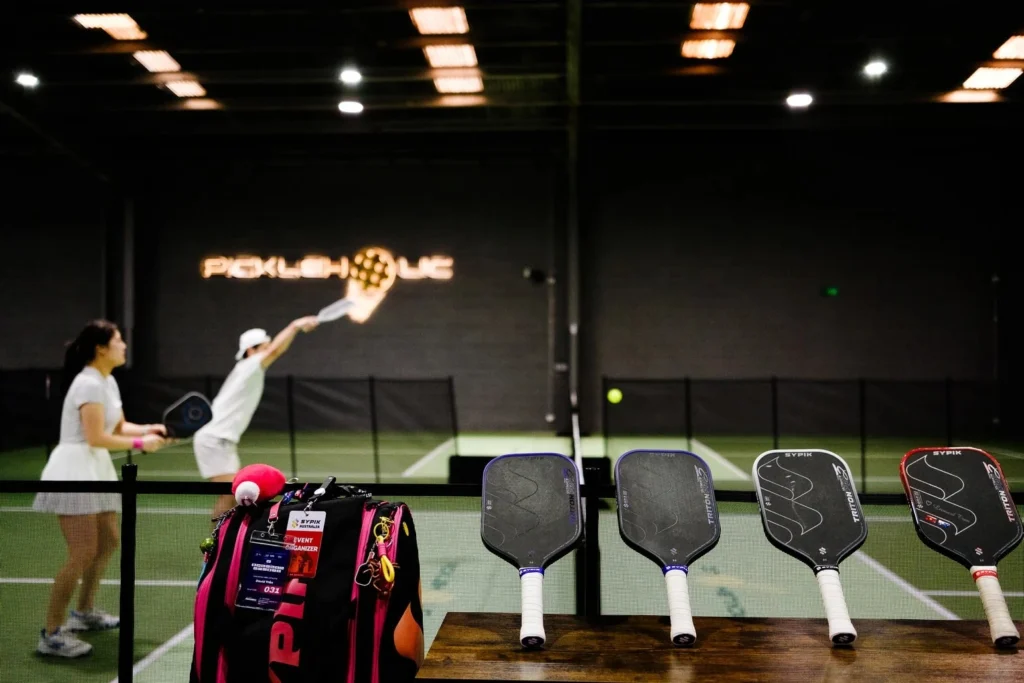
Pickleball court rules in Australia extend far beyond the boundaries of the playing lines. They encompass rotation systems, facility access policies, etiquette expectations, and equipment responsibilities that collectively determine whether pickleball can coexist successfully within shared venues.
By understanding pickleball court rules, respecting pickleball court etiquette, complying with pickleball court usage rules, and adapting to open play pickleball rules, players directly contribute to the long-term viability of their local courts.
As demand for court access continues to rise, communities that demonstrate strong operational discipline will be best positioned to secure future facilities, expanded time allocations, and sustainable development pathways for pickleball across Australia.
Discover Sypik Australia today and equip your pickleball program for reliable, venue-ready performance across Australia!