No products in the cart.

Menu
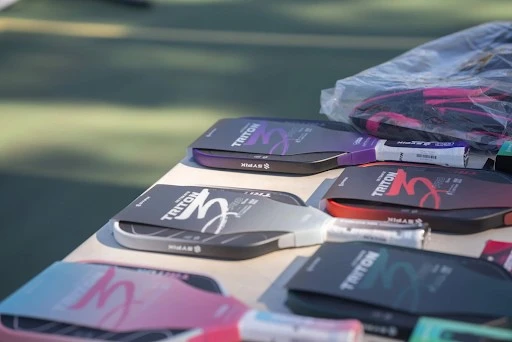
The Sypik paddle range represents a performance-focused lineup developed to support modern pickleball players who train regularly, compete under structured formats, and demand consistent feedback from their equipment.
As the Australian distributor and brand representative, Sypik Australia positions the Sypik range to serve both individual players and organised clubs that require reliable, long-term equipment solutions.
Rather than offering a wide collection of overlapping designs, the Sypik portfolio is built around clearly differentiated performance profiles. Each model targets a specific development stage and playing style while maintaining a shared engineering philosophy focused on stability, predictability, and durability.
This guide provides a structured overview of the Sypik paddle range, helping players, coaches, and clubs understand how different Sypik paddle models fit within training programs, competitive environments, and long-term development pathways.
From a market positioning perspective, the Sypik paddle range is designed for players who have moved beyond casual recreational play and now require equipment that supports repeatable technique and tactical consistency.
Within the broader category of pickleball equipment, Sypik paddles are positioned for players who participate in organised training, coached sessions, and structured matches rather than purely social or occasional play.
This positioning reflects the needs of players who expect predictable paddle behaviour during drills, rallies, and competitive scenarios, where technical execution and shot reliability directly affect performance outcomes.
Within the broader pickleball equipment market, Sypik paddles are not positioned as low-cost entry options. Instead, the range focuses on delivering consistent ball response, stable construction, and controlled performance characteristics that remain reliable under match conditions and high-frequency training schedules.
The emphasis is placed on functional performance rather than novelty features, ensuring that players experience dependable feedback and controllable shot behaviour during repeated training cycles and competitive play.
This performance-driven positioning allows the paddles to serve as long-term training tools rather than short-term recreational products.
Across the portfolio, Sypik emphasises material consistency and structural stability so players experience minimal variation in feedback when transitioning between different models or replacing worn paddles.
This consistency is particularly important for clubs and coaching programs, where equipment variability can interfere with skill acquisition, technical benchmarking, and the accurate evaluation of player progress.
For Sypik Australia, this positioning aligns closely with the growing domestic pickleball ecosystem, in which organised leagues, coached development programs, and facility-based training sessions are becoming more prevalent than purely social play formats.
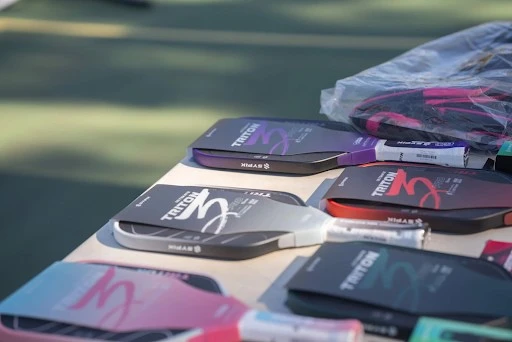
The unifying design philosophy behind the Sypik paddle range is built around balanced performance rather than extreme optimisation of a single attribute such as power or spin. Instead of engineering paddles to excel only in aggressive shot production, Sypik focuses on delivering stable control, predictable response, and reliable feedback across a wide range of playing situations.
This design direction supports players who construct points through placement, consistency, and tactical decision-making, rather than relying primarily on high-speed attacking patterns.
A key engineering priority within the Sypik paddle portfolio is ensuring that contact behaviour remains consistent at different rally intensities. Whether executing soft dinks and resets at the kitchen line or driving the ball from the baseline, the face response is tuned to remain stable and easily readable by the player.
By avoiding large variations in rebound behaviour between slow and fast swings, players can maintain the same stroke mechanics while transitioning between defensive, neutral, and offensive phases of play. This predictability reduces unnecessary compensations in swing path and timing, particularly during extended rallies.
Another defining element of the design philosophy is cross-model consistency within the Sypik paddle ecosystem. Sypik engineers intentionally align the core structural characteristics and surface response profiles across different models so that players can move between paddles without experiencing disruptive changes in feel.
This consistency is especially valuable for players progressing through different performance tiers, as well as for clubs and training programs where multiple models may be used simultaneously. Maintaining a familiar impact sensation helps preserve technical stability and learning continuity.
Rather than amplifying raw output, the Sypik paddle range focuses on controlled and linear energy transfer. The objective is to ensure that the energy generated by the player is translated into ball speed in a predictable and proportional manner.
This controlled transfer allows players to regulate depth and trajectory more effectively, particularly in third-shot drops, transition resets, and controlled counter-volleys. As a result, players can manage pace without sacrificing touch, which is increasingly critical in modern pickleball, where soft-game dominance often dictates match outcomes.
From a structural perspective, the Sypik paddle lineup is engineered to minimise frame deformation and face twisting during off-centre contact. Reinforced composite constructions and carefully tuned core configurations contribute to improved torsional resistance when the ball strikes outside the central sweet spot.
Enhanced torsional control improves directional stability and reduces unintended deflection during fast exchanges at the non-volley zone. This characteristic is particularly beneficial for intermediate and advanced players who operate under high reaction speed and limited preparation time.
Vibration management is a core design consideration throughout the Sypik paddle range. Carbon-based face materials and optimised internal structures are used to reduce high-frequency vibration while preserving enough tactile feedback for accurate shot execution.
This balance between comfort and responsiveness helps limit cumulative hand and arm fatigue during long training sessions, while still providing players with precise sensory input for touch-oriented shots such as dinks, roll volleys, and controlled blocks.
The overall design philosophy of the Sypik paddle range is aligned with tactical and positional play rather than pure shot-making dominance. The paddles are engineered to support sustained rallies, consistent ball placement, and controlled exchanges at the kitchen line.
By prioritising stability and predictability, Sypik paddles enable players to maintain court positioning, manage tempo, and create scoring opportunities through structured point construction rather than relying on low-percentage power attacks.
For Sypik Australia, the shared engineering framework across the Sypik paddle portfolio offers clear operational and development advantages. Coaches, clubs, and retail partners can recommend different models to players at various skill levels while preserving a consistent performance foundation.
This simplifies equipment selection for training programs, reduces adaptation time for players transitioning between models, and supports long-term development pathways within the Australian pickleball community.
Across the Sypik range, the structural architecture of each pickleball paddle is engineered to preserve face stability when contact occurs outside the central sweet spot. This is particularly relevant during fast non-volley-zone exchanges and defensive recovery shots, where perfect contact is difficult to maintain.
By controlling frame stiffness and internal load distribution, the paddle face remains geometrically stable through impact. As a result, directional accuracy is better preserved even when players are forced into late reactions, stretched reaches, or emergency blocks near the kitchen line.
Rather than maximising rebound output, Sypik focuses on core configurations that prioritise controlled energy transfer and consistent dwell time. The internal core density and cell structure are tuned to regulate how long the ball remains on the face and how energy is released back into the shot.
This controlled response allows players to manage depth and trajectory more precisely during both soft exchanges and medium-pace drives. In practical play, it improves reliability on third-shot drops, transition resets, and neutral rally balls, where excessive rebound can easily lead to over-hits and positional disadvantage.
The striking surfaces across the Sypik range use carbon-reinforced composite face layers to maintain stable friction characteristics while preserving structural rigidity over extended usage cycles.
This material strategy reduces the likelihood of developing localised dead zones and uneven response patterns, which are commonly observed in lower-grade composite constructions after repeated impact. By maintaining uniform face behaviour across the hitting area, players experience more consistent ball launch and feedback throughout the service life of the paddle.
Edge reinforcement is implemented as a standard structural feature across the range. The reinforced perimeter protects the paddle during low-ball pickups, defensive scoops, and accidental edge strikes that frequently occur during fast exchanges near the non-volley zone.
Within the broader Sypik paddle range, the Avatar series is positioned as a control-focused solution designed to support structured rally construction and disciplined point building. The Sypik Avatar paddle is developed for players who value touch, placement, and decision-making reliability rather than aggressive, power-driven, or spin-biased play styles.
Avatar models are engineered with structural tuning that prioritises face stability at contact and uniform feedback across the usable strike zone. The construction emphasises predictable response characteristics, so players can clearly sense the ball’s contact quality, face angle, and impact location.
The playing characteristics of the Sypik Avatar paddle are especially well aligned with competitive doubles environments, where soft-game execution, transition control, and disciplined net play frequently determine rally outcomes.
The Avatar series is widely adopted within structured training and coaching programs because its predictable responses make technical errors in swing path, timing, and face orientation easier to detect and correct.
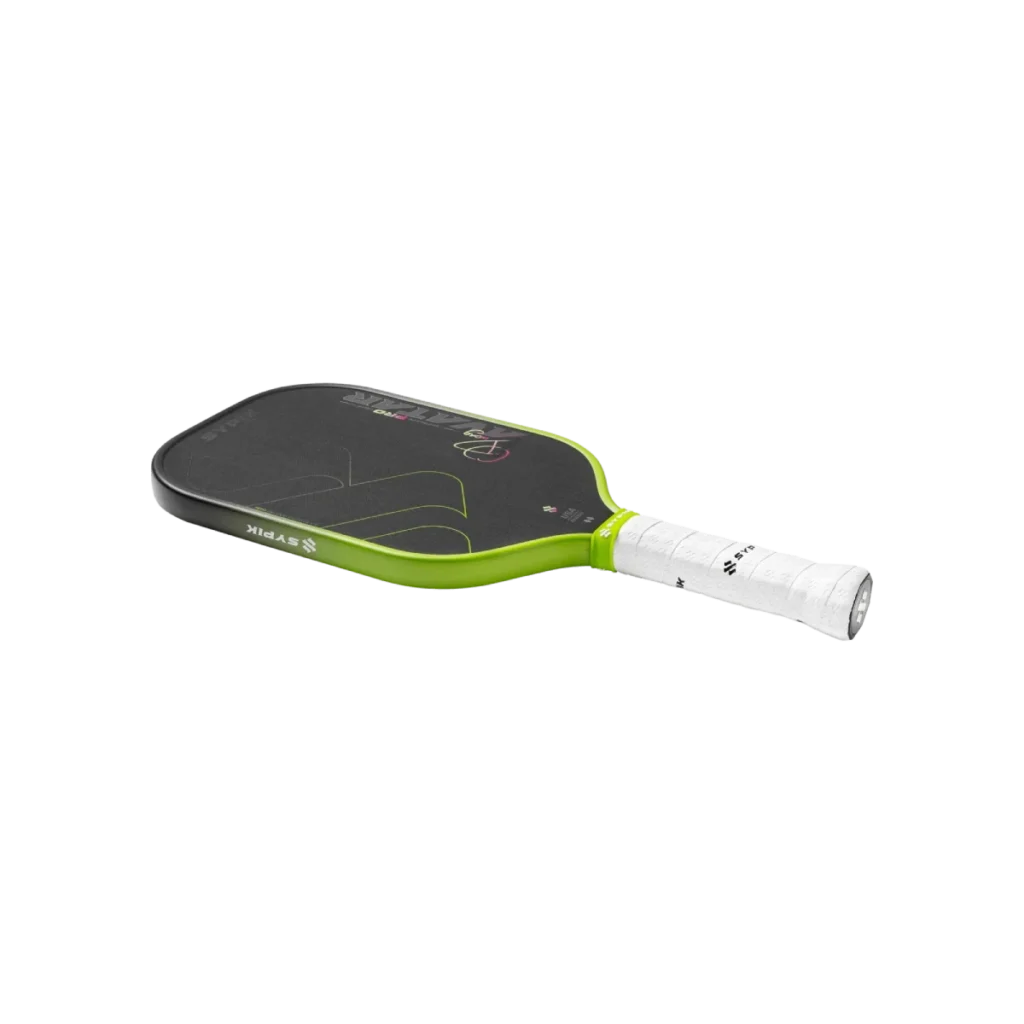
The Triton line represents the high-performance segment of the Sypik paddle models portfolio. The Sypik Triton Pro paddle is positioned for players seeking a more assertive and competition-ready response profile.
Compared with the Avatar series, Triton paddles deliver a more dynamic feel and slightly higher energy return. This is achieved while preserving control-oriented construction principles and stable contact behaviour.
The Sypik Triton Pro paddle is designed for intermediate and club-level players moving into structured competition environments. It supports attacking play while retaining placement control and usable dwell time during soft exchanges.
Higher-tier Triton models, including the Ultimate series, extend shot penetration and responsiveness through advanced materials and refined tuning. Within Sypik Australia’s portfolio strategy, the Triton line enables a smooth progression into performance-ready paddles without disruptive changes in handling.
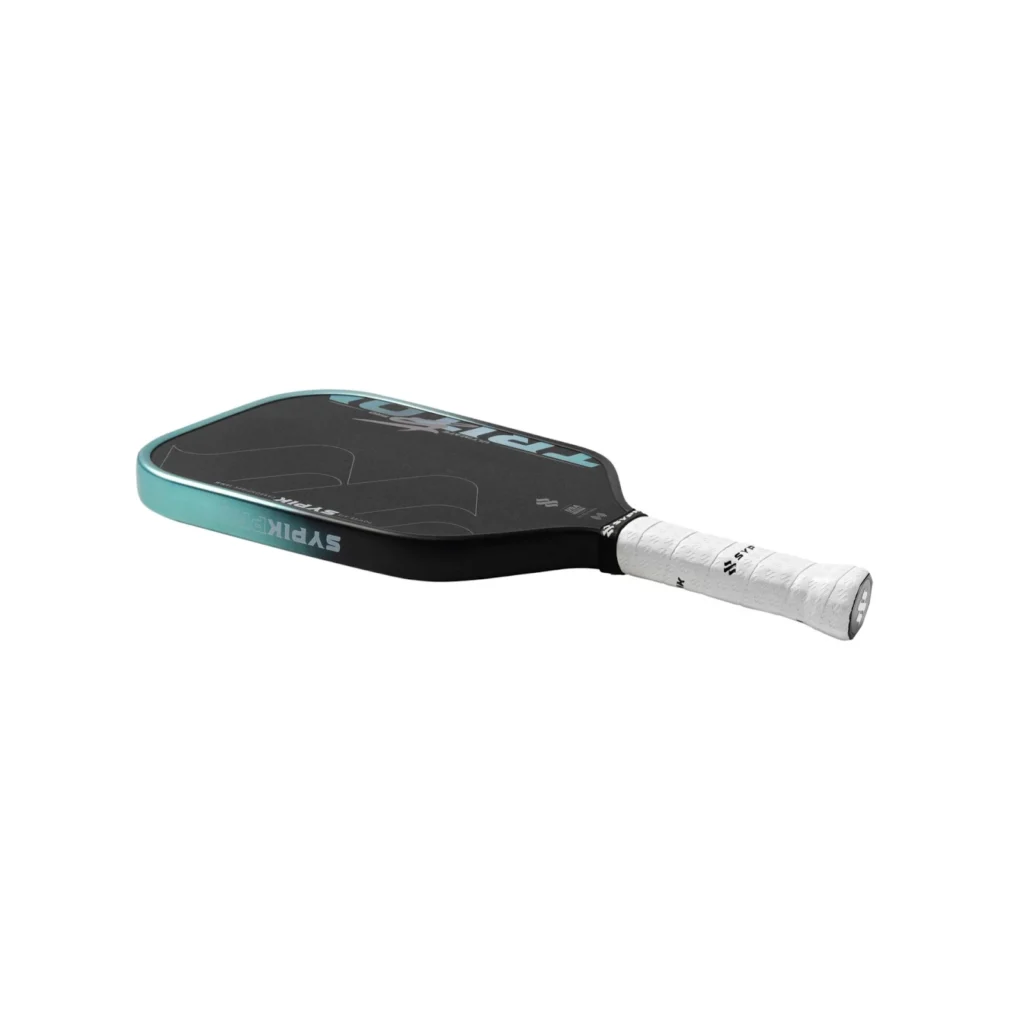
The Sypik paddle range is intentionally engineered to support the acquisition and refinement of advanced pickleball skills in structured training environments.
Across models, controlled dwell time and predictable rebound behaviour stabilise ball contact during soft exchanges, third-shot drops, and transition resets.
During counter-attack situations and fast-hand exchanges, a stable face response reduces unintentional face rotation. This directly supports more reliable directional control and shot placement at the non-volley zone.
From a coaching perspective, consistent paddle behaviour enables more accurate assessment during drills and match simulations. Players receive clearer tactile feedback on mis-hits and timing errors, accelerating technical correction.
For training programmes delivered through Sypik Australia, this performance stability supports long-term athlete development frameworks. Equipment consistency helps maintain reliable benchmarks as players progress across different training phases.
The Sypik paddle range delivers stable and repeatable surface friction, enabling players to generate controlled spin rather than relying on extreme spin effects.
This spin behaviour aligns closely with modern pickleball tips that emphasise shot shaping, placement discipline, and safer net-clearance margins.
Consistent surface response allows players to execute topspin drives, dipping passes, and angled dinks more confidently, helping refine swing paths and build repeatable tactical patterns during structured training.
The reliable spin response makes it easier for coaches to design drills based on standard pickleball tips, ensuring tactical patterns learned in practice can be transferred consistently into real match situations.
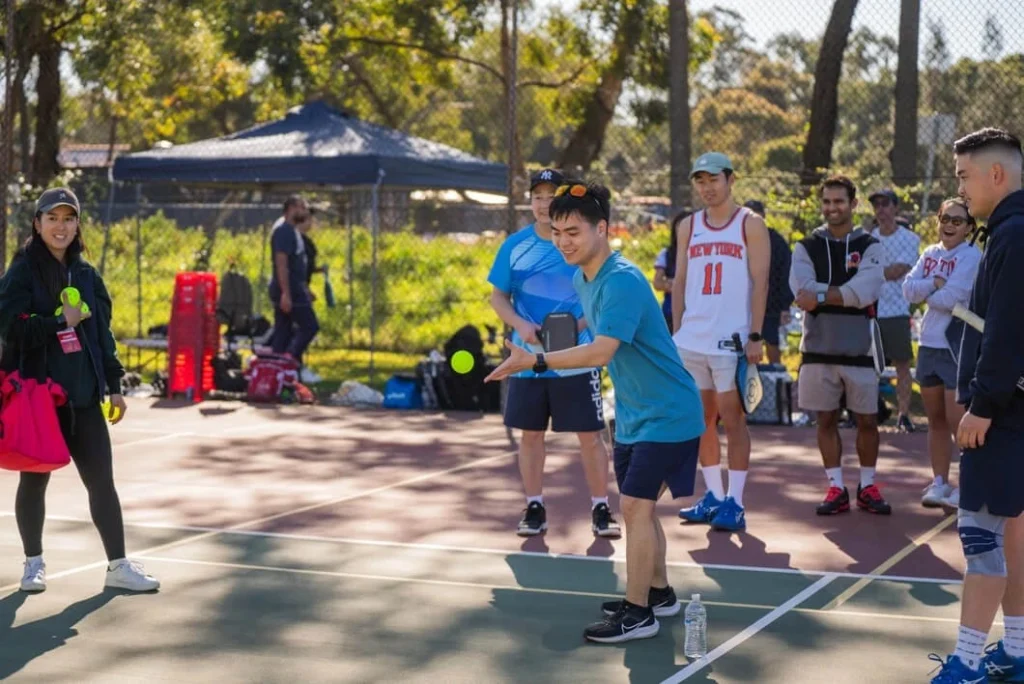
When evaluated against typical lightweight pickleball paddles, the Sypik range follows a different performance philosophy. While lightweight designs commonly prioritise swing speed and entry-level accessibility, they often compromise torsional stability and frame rigidity during off-centre contact.
This balanced construction enables fast hand speed during rapid exchanges at the non-volley zone, while maintaining directional control when absorbing pace in defensive blocks and counter-volleys. Players can react quickly without losing face stability, which reduces unintended paddle rotation in high-pressure net situations.
For competitive players, this stability becomes especially valuable during extended training and match sessions, where physical fatigue can amplify small handling errors.
Sypik’s stable feel helps preserve shot control and timing consistency, even as reaction speed and grip precision begin to decline late in play.
The handle geometries across the Sypik paddle range are engineered to integrate efficiently with standard pickleball accessories, particularly overgrips and vibration-management products.
The grip shape and length are optimised to support both compact and extended hand positions without introducing pressure points during prolonged play.
Factory grip profiles accommodate players who alternate between one-handed and two-handed backhands.
The handle dimensions also allow multiple overgrip layers to be added without materially altering overall swing balance or head feel, helping players fine-tune grip thickness for wrist stability and comfort.
This grip and accessory compatibility simplifies equipment personalisation in competitive settings, where players frequently adjust grip build-up to manage fatigue, sweat control, and long-session consistency.
For clubs and academies working with Sypik Australia, this standardised handle platform also improves equipment allocation and inventory management across multiple player groups.
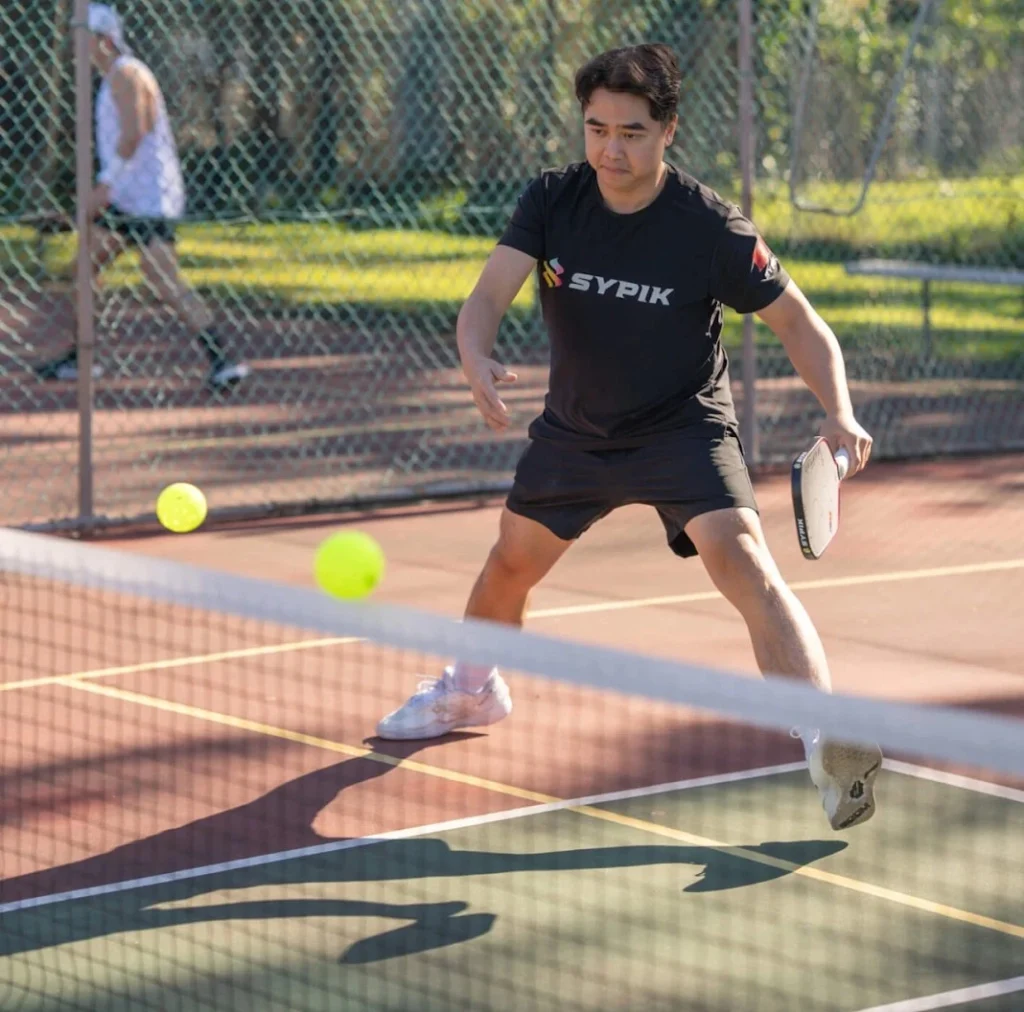
Although primarily positioned for performance-oriented players, several models in the Sypik paddle range can function effectively as progression tools for motivated learners who actively follow structured pickleball beginner tips.
The controlled response and enhanced tactile feedback enable developing players to detect timing errors, off-centre contact, and inefficient swing paths more clearly than overly forgiving or power-biased paddles. This accelerates technique refinement during structured drills and coached training sessions.
For learners upgrading from entry-level paddles, the transition typically delivers stronger directional control, higher confidence during net exchanges, and more consistent soft-game execution, particularly in dinking and block situations.
The Sypik range does not artificially increase power output, requiring players to rely on correct biomechanics, timing, and positioning. This reinforces disciplined development pathways promoted by Sypik Australia and its associated coaching and club partners, where long-term performance is prioritised over short-term equipment assistance.
While commonly sold as individual performance paddles, selected Sypik models integrate effectively into structured procurement programs and curated pickleball starter sets used by clubs, schools, and training centres.
Many facilities adopt a tiered inventory approach, introducing entry-level paddles first and progressively offering performance-oriented upgrades as players advance. Within this structure, Sypik paddles naturally occupy the transition tier, bridging recreational equipment and higher-performance models.
Within formal training frameworks, Sypik paddles are well-suited for structured drills, match-simulation sessions, and skill consolidation phases. Their predictable response characteristics support controlled learning environments, where consistency and repeatability are critical for coaching outcomes.
For Sypik Australia, this flexibility enables partner clubs and academies to design scalable equipment programs that align with long-term player development pathways, while simplifying inventory planning across multiple skill levels.
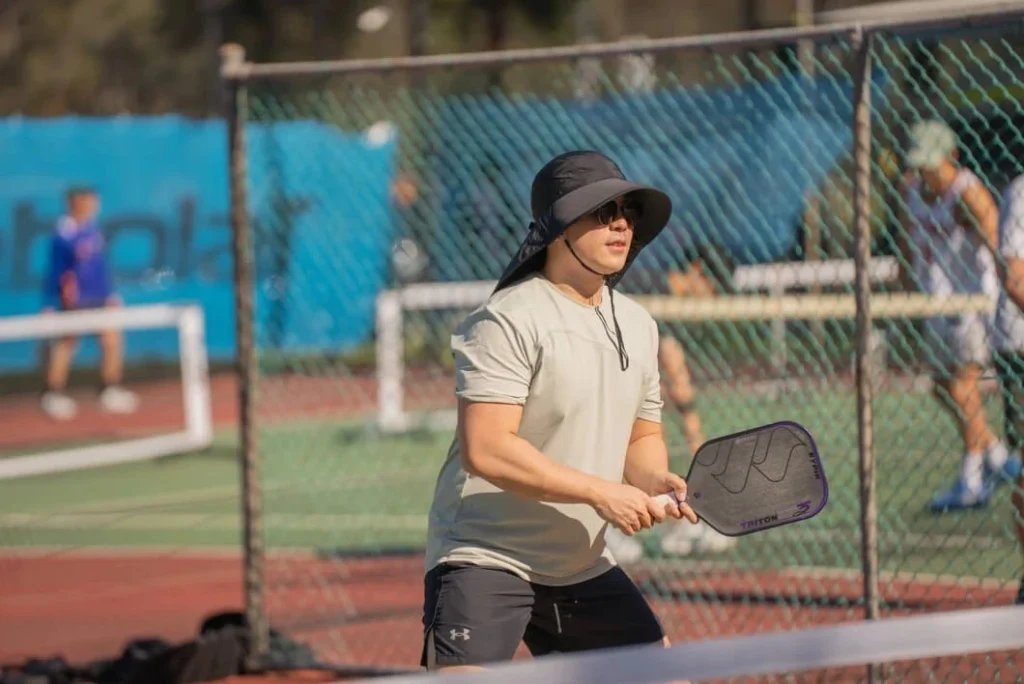
From an ownership and lifecycle perspective, the Sypik pickleball paddle range delivers strong operational value for both individual players and institutional buyers. The product positioning focuses not only on play performance, but also on long-term durability under repeated training and match conditions.
Reinforced edge constructions and stable face-layer bonding significantly reduce the risk of premature softening, perimeter delamination, and uneven surface wear.
For schools, clubs, and recreational centres supplied by Sypik Australia, this durability translates directly into longer replacement cycles and more predictable inventory planning. Facilities can standardise equipment fleets with fewer emergency replacements caused by early structural failures.
Stable performance over time supports player confidence and training continuity, especially in structured programs where mixed paddle conditions often affect learning outcomes.
The Sypik paddle range offers a focused and clearly structured portfolio designed to support players progressing through modern competitive and training environments.
Rather than overwhelming buyers with overlapping specifications, Sypik provides distinct performance profiles that allow players to select models based on control preference, handling stability, and long-term development needs.
For Australian players, clubs, and institutions, Sypik Australia plays a central role in ensuring that these models are deployed in a way that supports sustainable growth of the local pickleball ecosystem.
Explore the Sypik paddle range with Sypik Australia and find the paddle model that fits your training and competition goals!