No products in the cart.

Menu
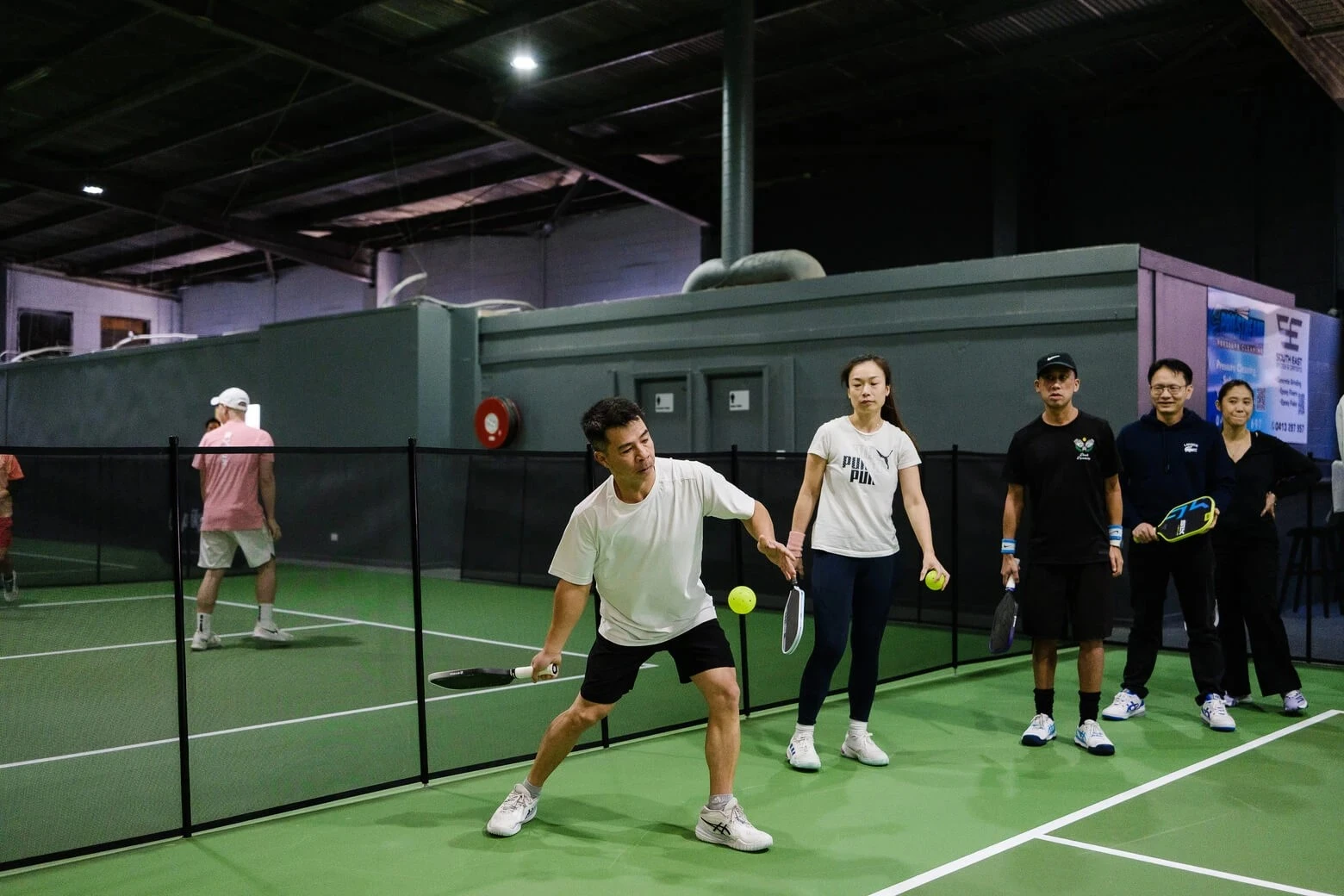
Pickleball is growing rapidly across Australia, particularly through outdoor community courts, social clubs, and shared public facilities. As participation expands, many players quickly discover that simply buying better equipment does not automatically lead to better results. Long-term improvement comes from developing structured, repeatable pickleball skills that directly support consistency, decision-making, and confidence during real rallies.
This guide focuses on practical, court-ready skill development aligned with how most players in Australia actually learn – through informal sessions, mixed-level social games, and frequent rotation between public venues. The learning principles below also reflect the control-first philosophy promoted by specialist retailers such as Sypik Australia, whose product ranges are designed specifically for recreational and entry-to-intermediate players.
If your goal is to improve rally stability, reduce unforced errors, and build reliable habits that transfer into real matches, the following sections outline the essential foundations of effective pickleball skills development.
Pickleball is growing rapidly across Australia, particularly through outdoor community courts, social clubs, and shared public facilities. As participation expands, many players quickly discover that simply buying better equipment does not automatically lead to better results. Long-term improvement comes from developing structured, repeatable pickleball skills that directly support consistency, decision-making, and confidence during real rallies.
This guide focuses on practical, court-ready skill development aligned with how most players in Australia actually learn – through informal sessions, mixed-level social games, and frequent rotation between public venues. The learning principles below also reflect the control-first philosophy promoted by specialist retailers such as Sypik Australia, whose product ranges are designed specifically for recreational and entry-to-intermediate players.
If your goal is to improve rally stability, reduce unforced errors, and build reliable habits that transfer into real matches, the following sections outline the essential foundations of effective pickleball skills development.
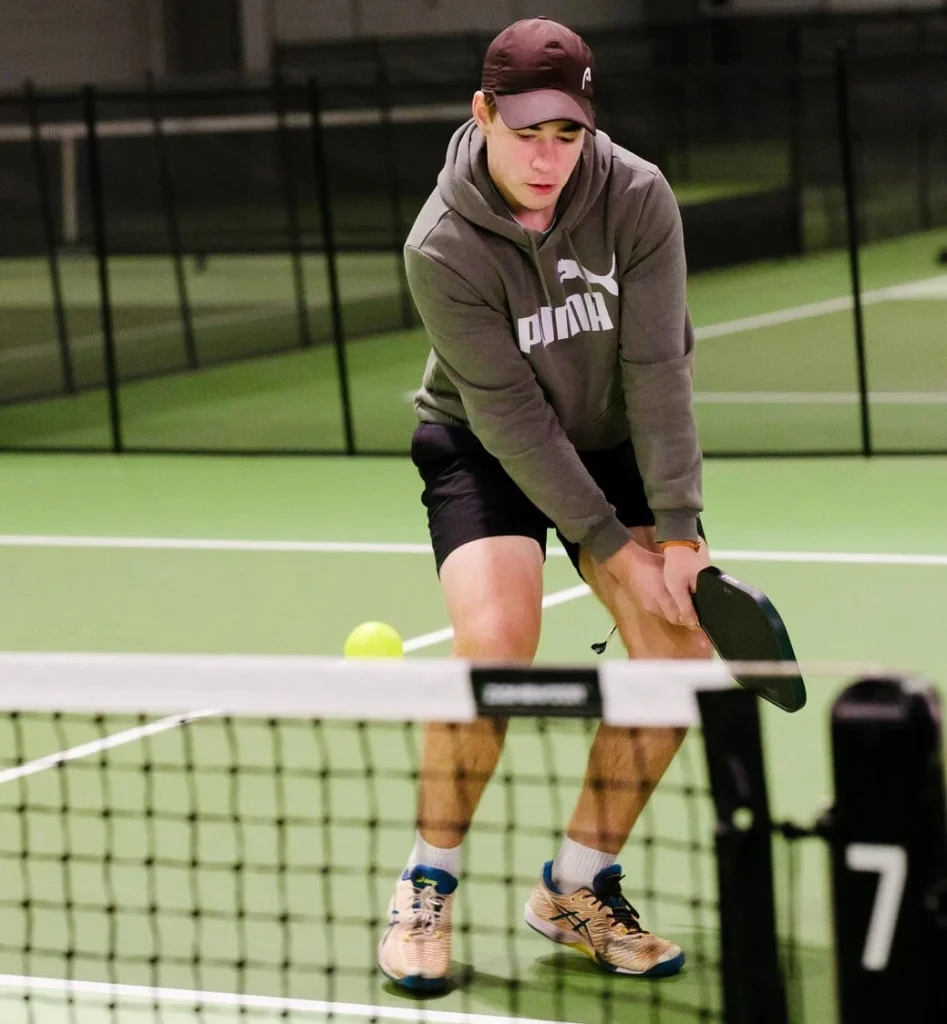
Pickleball footwork is one of the most underestimated performance drivers, especially among social and developing players. A large proportion of shot errors are not caused by poor swing mechanics, but by arriving late to the ball, losing balance, or positioning too close to the bounce point.
Consistent movement patterns allow players to arrive earlier and set stable hitting positions, which directly improves contact quality and shot control. Over time, this reduces reliance on last-second adjustments and enables players to execute their intended pickleball skills with greater accuracy under rally pressure.
The most important movement pattern in doubles play is controlled forward movement to the non-volley zone immediately after the return of serve. As part of practical pickleball skills development, remaining deep near the baseline significantly reduces volley opportunities and places both partners under continuous defensive pressure.
Timely progression toward the kitchen line allows teams to establish neutral positioning earlier and limit opponents’ attacking angles. As part of effective pickleball skills development, this positioning advantage increases the likelihood of soft exchanges and forces weaker third shots, creating more controlled entry into the rally.
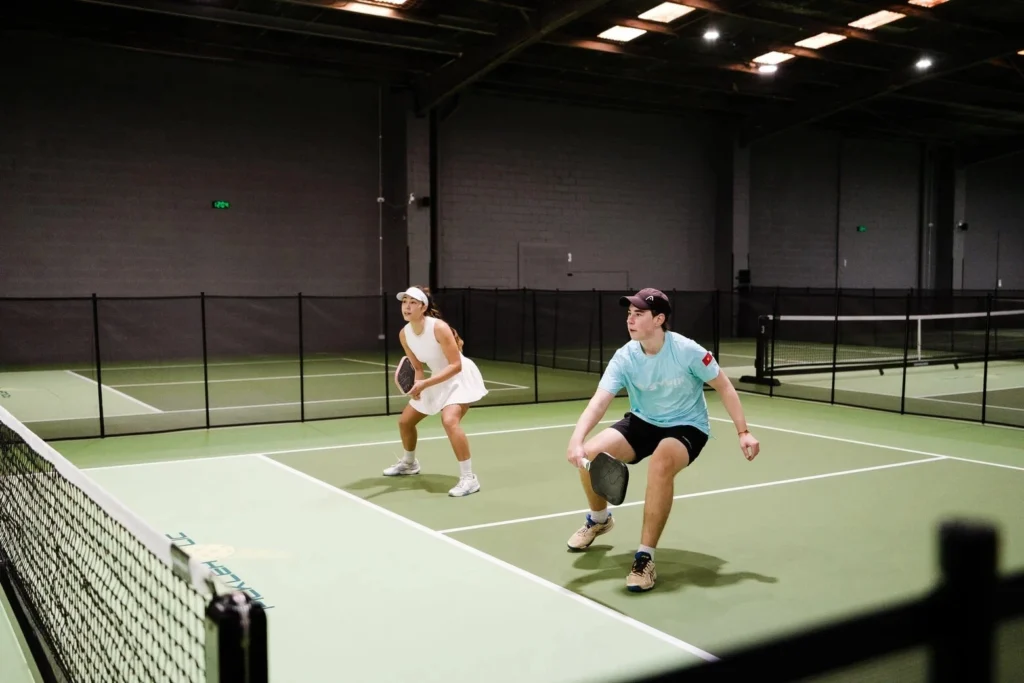
Effective movement across pickleball courts depends on several habits that must be trained deliberately. These include split-step timing just before the opponent contacts the ball, short adjustment steps instead of large lunges, and maintaining side-by-side defensive alignment with a partner.
These habits help players stabilize posture before contact and reduce late, off-balance swings under pressure. As part of practical pickleball skills development, when movement remains compact and synchronized with a partner, teams close central gaps more effectively and produce fewer high, attackable balls during defensive exchanges.
Rather than chasing the ball laterally as individuals, successful teams shift their defensive line together. As part of effective pickleball skills development, this coordinated movement closes central gaps and reduces the need for emergency reaching shots, which often result in high, attackable balls for the opposition.
This shared movement pattern also improves communication and anticipation between partners, allowing each player to protect their assigned zone with greater confidence. As part of practical pickleball skills development, a stable defensive shape over time makes transitions to the net cleaner and reduces breakdowns during fast, wide exchanges.
Australian outdoor courts frequently vary in lighting, background contrast, and surface friction. As part of effective pickleball skills development, practising footwork in these environments improves balance control and helps players judge stopping distance before contact, leading to cleaner posture and more reliable swing execution.
This environmental exposure also accelerates perceptual adaptation, helping players read ball flight earlier under glare, wind, and visual noise. As part of practical pickleball skills development, movement timing becomes more automatic and less dependent on ideal court conditions.
Movement training does not always require the ball. As part of effective pickleball skills development, simple shadow drills that rehearse stepping forward, recovering to neutral positions, and rotating after wide shots reinforce patterns that transfer directly into live rallies.
This type of off-ball practice improves movement efficiency without cognitive overload from shot execution. As part of practical pickleball skills development, it allows players to groove timing and spacing patterns first, so transitions during live points become faster and more controlled.
Efficient footwork reduces physical fatigue, simplifies shot selection, and consistently creates more time for tactical decision-making during competitive play. As part of effective pickleball skills development, players are able to maintain rally quality deeper into matches and sustain concentration under pressure.
This translates into fewer rushed shots, more stable patterns of play, and higher success rates during extended exchanges.
For most recreational players, an early focus on power creates more technical problems than performance benefits. As part of practical pickleball skills development, effective progression requires clearly separating the learning phase of control from the later introduction of power-based shot patterns, allowing players to stabilize contact quality and spacing first.
Control-based shot building centres on dinks, third-shot drops, defensive resets, and neutral volleys. As part of effective pickleball skills development, these shots help players manage pace, height, and court positioning before introducing aggressive intent, especially during longer and more neutral rally phases.
The feedback provided by the pickleball paddle plays a supportive role during this stage. Paddles with a softer face response and moderate swing weight promote longer dwell time, making it easier for players to feel paddle angle and regulate ball height in soft exchanges.
Highly stiff or power-focused paddles tend to magnify timing and spacing errors when swing paths are not yet stable. As part of practical pickleball skills development, instead of learning touch and control, players often compensate through excessive grip pressure and wrist manipulation.
This compensation pattern frequently slows skill acquisition and reinforces inconsistent contact habits. As part of effective pickleball skills development, over time, players may struggle to develop soft-game proficiency, particularly in dinks and resets where precise face control is more critical than raw power.
At Sypik Australia, entry and intermediate paddles are positioned to support control-based shot quality before players transition toward higher-power frames. As part of practical pickleball skills development, this reflects how most Australian players progress through social play and community sessions rather than formal academy programs.
Developing control first creates a stable technical base from which controlled power can be added later, without sacrificing consistency, shot tolerance, or rally reliability. As part of effective pickleball skills development, this progression also reduces long-term injury risk and overuse strain by promoting efficient swing mechanics and relaxed grip control.
As players gradually layer power onto stable technique, they maintain precision under pressure and sustain performance across longer, more physically demanding matches. This approach is a key component of effective pickleball skills development.
Rules as a tactical foundation
Many tactical mistakes in real play do not come from technical limitations, but from a weak understanding of how the pickleball court rules structure each rally. When players clearly understand how the rules define legal positioning and shot timing, they make more accurate decisions about when to attack, when to reset, and when patience creates a better scoring opportunity.
The two-bounce rule and the non-volley zone fundamentally control the opening phase of every rally. As part of practical pickleball skills development, recognizing that opponents must allow the ball to bounce after your return encourages higher and deeper returns that disrupt third-shot quality, while proper awareness of legal positioning near the kitchen reduces unnecessary faults during fast volley exchanges.
Rather than memorizing rules in isolation, players benefit more by observing how experienced participants build rallies around these constraints. As part of effective pickleball skills development, soft drops, controlled resets, and disciplined positioning consistently outperform early net rushing and low-percentage power drives that ignore rule-driven rally structure.
Strong rule awareness improves tactical discipline and limits emotional shot selection during chaotic social games. As part of practical pickleball skills development, players begin choosing shots based on structural advantage created by the rules, instead of reacting impulsively to short balls or temporary openings.
The most effective routines are simple enough to repeat without supervision. Many useful pickleball tips focus on how practice time is structured, rather than creating complicated drills that are difficult to sustain consistently.
Short, focused sequences that isolate one skill at a time deliver stronger learning outcomes than match-style play. As part of effective pickleball skills development, dink exchanges, block-and-reset drills, and directional serve routines allow players to monitor contact quality, ball height, and consistency with much clearer feedback.
A highly efficient habit is the five-minute reset drill, where one player feeds medium-pace balls, and the other practises soft resets into the kitchen. As part of practical pickleball skills development, this simultaneously develops touch, paddle-face awareness, and defensive stability.
Practising under light wind conditions is particularly valuable for Australian players, who are frequently exposed. As part of effective pickleball skills development, learning to adjust swing speed and net clearance under changing airflow significantly improves match resilience.
The central principle is repetition supported by immediate feedback. As part of practical pickleball skills development, if a shot cannot be repeated reliably in low-pressure practice, it is unlikely to appear consistently during real competition.
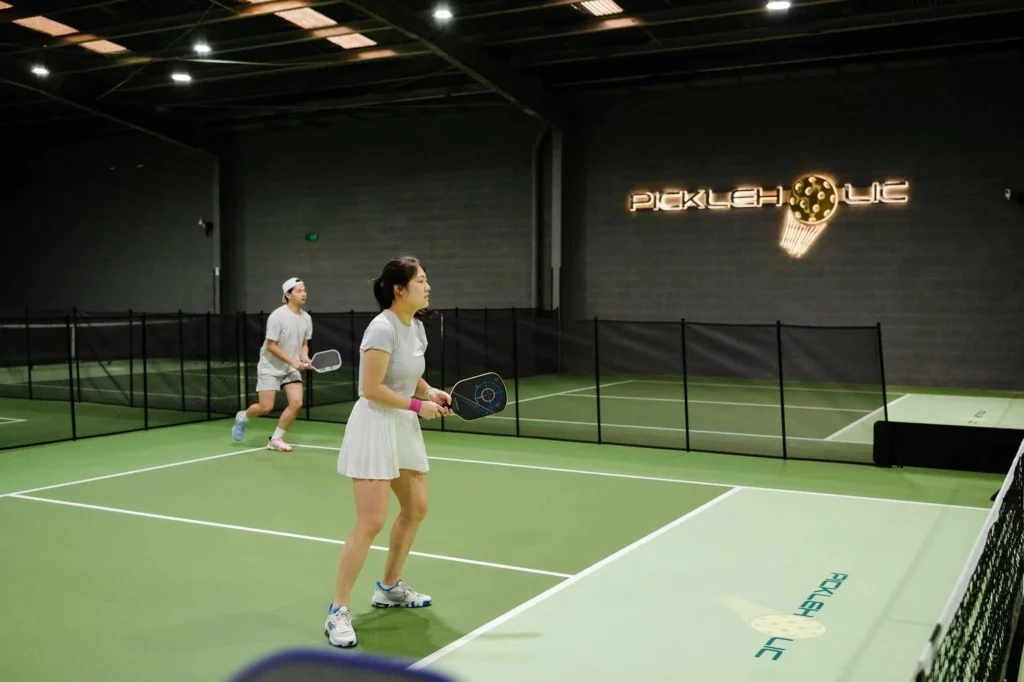
While skills ultimately drive performance, suitable pickleball equipment plays an important supporting role by reducing unnecessary variability during practice. Predictable paddle response, consistent ball behaviour, and reliable construction all contribute directly to technical stability.
Outdoor-rated balls maintain their shape and rebound far more consistently on abrasive public courts. As part of effective pickleball skills development, paddles with reinforced edges and durable face coatings also preserve surface texture, which directly affects touch control and spin reliability in soft-game exchanges.
Learning stability is not about performance optimization, but about removing equipment-related interference. As part of practical pickleball skills development, when paddle feedback becomes predictable, players stop compensating for inconsistent response and can focus more effectively on posture, spacing, and timing.
For players rotating between parks, schools, and shared recreational facilities, durability becomes a critical selection factor. As part of effective pickleball skills development, consistent equipment behaviour across different courts accelerates skill transfer and reduces frustration during learning sessions.
Support tools and pickleball accessories play a subtle but important role in long-term skill development by improving comfort and reducing unnecessary physical and equipment-related distractions during practice.
Overgrips improve moisture control in hot and humid playing conditions and help reduce excessive grip tension, which commonly leads to unstable paddle control and inconsistent contact quality during longer sessions. As part of practical pickleball skills development, they support more consistent strokes and better overall control.
Edge protection and paddle covers help preserve thin frame edges and surface coatings, especially when equipment is placed on concrete or asphalt surfaces that are common across public pickleball courts. As part of effective pickleball skills development, these measures help maintain consistent paddle feel and reliable shot performance over time.
Although accessories are simple, they directly support training consistency by keeping hands comfortable and equipment protected. As part of practical pickleball skills development, this predictable feel reduces interruptions during practice and allows players to maintain focus for longer learning blocks.
Accessories should enhance reliability and comfort rather than introduce unnecessary complexity into a beginner or intermediate setup. As part of effective pickleball skills development, a small number of well-chosen items is usually sufficient to support consistent technical development.
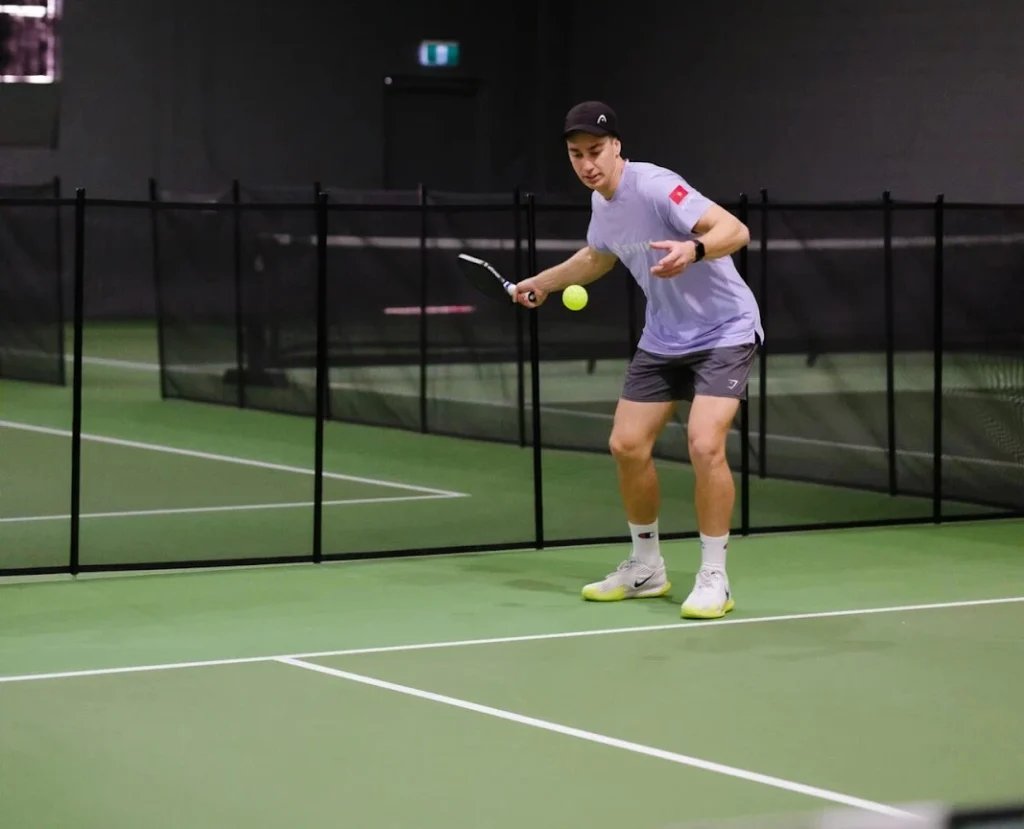
Moderate lightweight pickleball paddles support faster hand reactions and lower arm fatigue, especially for players without a racket-sport background. As part of practical pickleball skills development, better manoeuvrability makes it easier to execute blocks, short volleys, and soft resets during rapid exchanges at the kitchen line.
Reduced swing weight helps players maintain movement quality and hand speed across longer social sessions. As part of effective pickleball skills development, this allows technical execution to remain stable even as physical fatigue increases.
Lightness must be balanced with structural stability. Extremely light paddles can feel unstable on deeper shots and baseline resets, which often leads to inconsistent feedback during defensive play.
Well-designed lightweight options preserve frame stiffness and surface response while improving handling speed. This balance supports movement-based skill execution without sacrificing contact reliability.
When selected appropriately, lighter designs help players stay engaged during fast rallies and maintain technical quality under pressure and fatigue.
For players who are unsure about long-term commitment, pickleball starter sets provide a low-risk and accessible entry point into the sport. Well-constructed sets typically include paddles with reinforced edges and outdoor-rated balls that are suitable for regular use on public courts.
Starter sets are especially practical for families, school programs, and social groups that rotate equipment across multiple sessions. Consistent paddle response and durable construction create a stable learning platform for early timing and spacing development.
Not all starter sets deliver the same learning value. Entry-level kits that prioritize durability and balanced feel support technical progress far more effectively than ultra-cheap options that lose surface quality and structural stability after limited use.
Sypik Australia designs beginner-focused bundles to maintain predictable paddle behaviour across repeated sessions. This consistency allows new players to concentrate on core technique and movement patterns, rather than compensating for unstable or inconsistent equipment feedback.
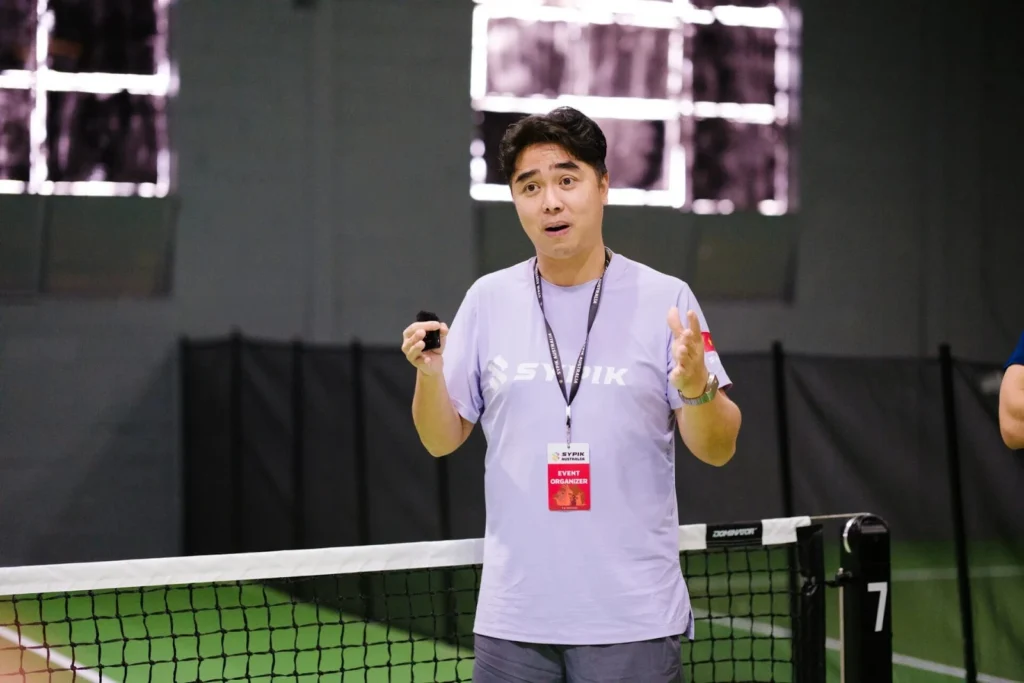
One of the challenges players face when improving is adapting to drastic changes in equipment behaviour when upgrading. Sudden changes in balance profile, surface response, or swing weight often disrupt established mechanics.
The Sypik paddle range is structured to support gradual progression from beginner to intermediate performance without abrupt handling changes. This ecosystem approach allows players to retain familiar touch and balance characteristics while accessing incremental performance improvements.
For recreational players, this continuity supports confidence and accelerates learning transfer. Skills developed at the starter and entry level remain usable as players move into more advanced frames.
Build your skills on a stable foundation and explore the Sypik Australia range designed specifically to support real-world pickleball skill development on Australian outdoor courts!