No products in the cart.

Menu
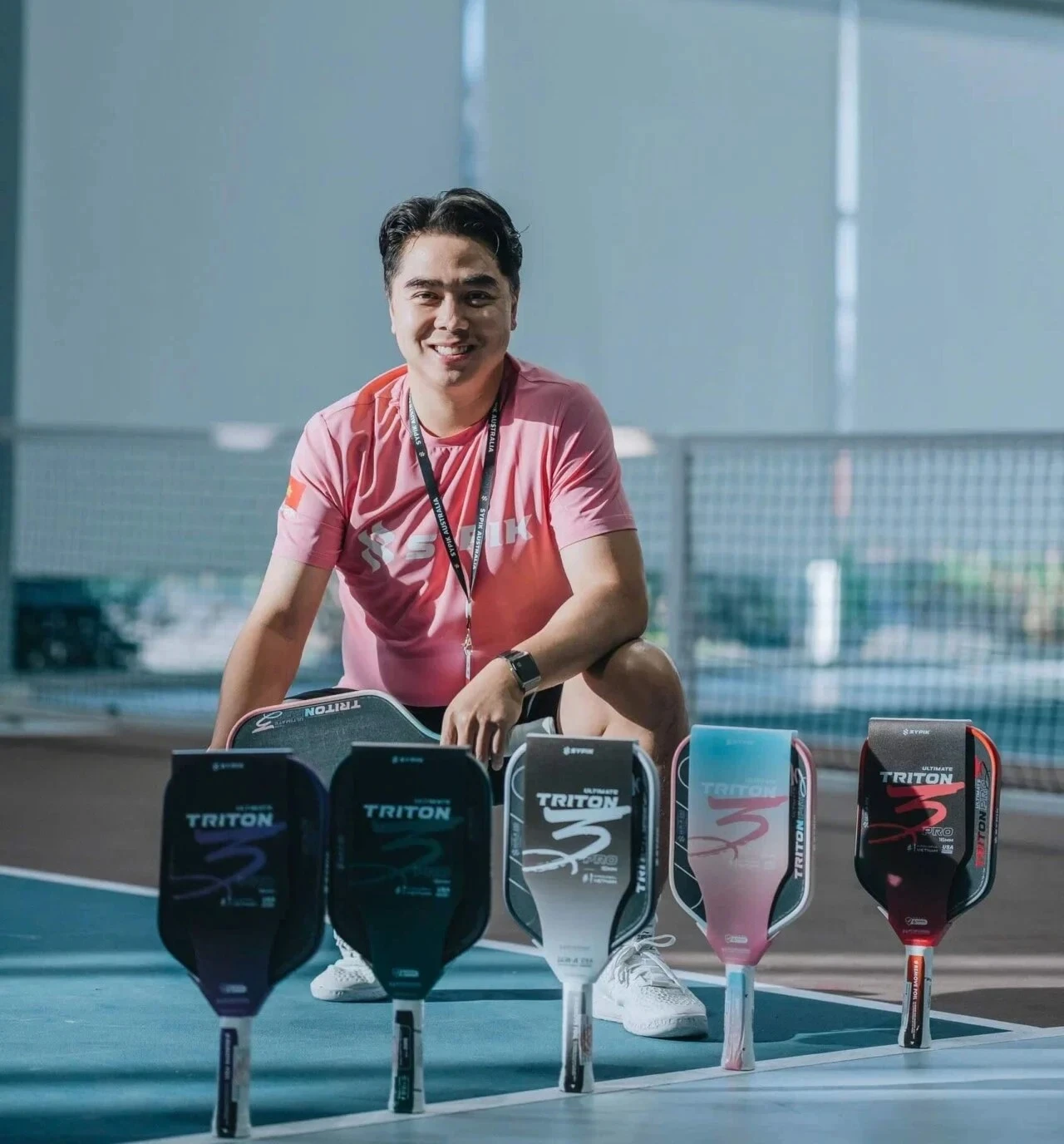
Choosing the right pickleball paddle is one of the most important decisions for any player, regardless of experience level. In Australia, where outdoor courts dominate and community-based play continues to expand rapidly, paddle selection is influenced not only by skill level but also by climate, surface conditions, and long-term durability requirements.
This guide explains how to evaluate a pickleball paddle properly, from construction technology and performance characteristics to player profiles and real-world usage in Australia, with practical insights aligned to the product approach of Sypik Australia.
When players first enter the sport, the pickleball paddle is often treated as a simple entry-level tool. In reality, it is the central performance component within any playing system and directly affects shot quality, control, comfort, and injury risk.
Within a complete playing setup, the paddle works in combination with shoes, balls, and protective gear. Players who are building a full system should understand how their pickleball equipment integrates with paddle weight, grip size, and surface technology to maintain balance across the entire setup.
A well-matched pickleball paddle allows players to execute basic strokes more efficiently, stabilise contact points, and develop consistent swing mechanics. Over time, these benefits compound and strongly influence long-term learning speed and confidence during matches.
From an Australian market perspective, players increasingly invest in their first serious pickleball paddle much earlier in their playing journey. This shift reflects growing awareness that a properly selected paddle reduces the need for frequent upgrades and supports steady technical progression.
Modern pickleball paddle construction is defined by two main components: the face material and the internal core. These elements determine how the paddle behaves at ball contact and how efficiently energy is transferred from the player’s swing to the ball.
The choice of pickleball paddle face material, therefore, directly influences touch sensitivity, dwell time, and feedback at contact, making it a key factor when players compare different pickleball paddle models for control-focused or power-oriented playing styles.
Most contemporary paddles utilise graphite, raw carbon fibre, or fibreglass faces. Graphite and carbon surfaces deliver higher stiffness and faster energy return, supporting sharper directional control and more predictable rebound behaviour. Fibreglass faces, by comparison, provide a slightly softer impact response and greater forgiveness for players who are still developing timing accuracy.
This distinction allows players to select a pickleball paddle face that best matches their technical maturity, with stiffer surfaces favouring confident ball strikers and softer surfaces supporting consistency and error reduction during skill development.
The internal core of a pickleball paddle is typically constructed from polymer honeycomb, Nomex, or aluminium. Polymer cores dominate the Australian recreational and club market because they offer a balanced noise profile, effective vibration damping, and strong long-term durability for regular training use.
This core configuration helps stabilise the pickleball paddle during off-centre hits and supports more consistent shot feedback, which is especially valuable for players training frequently on busy Australian public courts.
For players who want to understand how protective components and grip systems interact with modern paddle materials, reviewing compatible pickleball accessories can help ensure proper structural compatibility and preserve the original balance characteristics of the paddle.
This becomes particularly important when adding overgrips, edge guards, or vibration-dampening products, as poorly matched pickleball accessories can subtly alter swing weight and handle balance, which may affect control consistency and touch performance over extended training sessions.
In Australia’s outdoor playing environment, temperature fluctuations and prolonged sun exposure can gradually affect surface coatings and bonding layers. For this reason, durable face treatments and reinforced edges are particularly important for players who train several times per week and rely on long-term performance consistency.
Exposure to UV radiation, heat variation, and fine dust commonly found at outdoor Australian courts can accelerate surface wear and adhesive degradation over time. As a result, selecting paddles with UV-resistant coatings, strengthened edge protection, and higher bonding quality becomes a practical consideration for players seeking stable performance and reliable structural integrity across frequent outdoor training sessions.
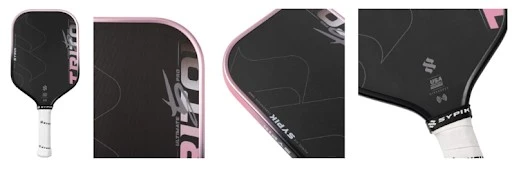
Lightweight paddles improve manoeuvrability, reaction speed, and hand positioning, particularly during fast exchanges at the kitchen line. They also help reduce arm fatigue across longer rallies and repeated drills. However, very light paddles demand more precise timing and cleaner contact to maintain reliable depth and shot control.
Heavier paddles, in contrast, generate greater swing momentum and allow players to produce stronger drives with less acceleration. This characteristic supports more aggressive baseline play and makes it easier to apply pressure during passing shots and deep returns.
The balance point of a pickleball paddle plays an equally important role in overall handling and shot stability. Head-heavy designs naturally assist power generation and help players drive the ball deeper with a more compact swing. Handle-balanced paddles, on the other hand, improve control and stability during rapid exchanges at the net, where quick wrist adjustments and short reaction windows are common.
Selecting a suitable balance profile can significantly reduce unnecessary wrist and forearm strain while promoting smoother swing mechanics throughout extended playing sessions.
Within Australian community and club environments, players frequently participate in long social sessions rather than short competitive matches. In these conditions, fatigue management becomes a practical performance factor rather than a competitive luxury. Choosing an appropriate combination of paddle weight and balance helps players maintain consistency, protect their joints, and sustain reliable shot quality over multiple games and training blocks.
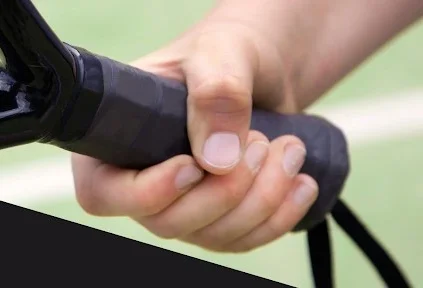
Grip circumference is one of the most frequently overlooked aspects of pickleball paddle selection, yet it has a direct impact on wrist alignment, stroke efficiency, and long-term joint health. An incorrectly sized grip can compromise shot accuracy and gradually increase the risk of overuse injuries in the wrist and forearm.
A grip that is too small forces players to squeeze more tightly to stabilise the paddle, accelerating muscular fatigue and placing unnecessary strain on the forearm. In contrast, a grip that is too large restricts natural wrist articulation and reduces fine touch control, particularly during soft shots, dinks, and reset strokes around the non-volley zone.
Players who are still developing basic hand positioning and stroke patterns often benefit from consulting practical pickleball tips to better understand how grip size interacts with swing mechanics and contact consistency.
Comfort is influenced not only by grip size but also by the quality of the handle’s cushioning and vibration-damping structure. Well-designed handle systems reduce micro-shock transmitted through the paddle during repeated ball impacts, helping to protect the wrist, elbow, and shoulder over time.
This feature becomes especially important for players who train regularly on hard outdoor surfaces, which are common across many Australian public courts and community venues. Reduced vibration contributes to a smoother feel at contact and supports more relaxed grip pressure during extended sessions.
A properly fitted pickleball paddle grip enhances confidence during longer rallies and encourages stable, repeatable technique. When the grip matches a player’s hand size and comfort requirements, it allows natural hand movement patterns to remain intact rather than forcing compensatory adjustments.
Over the long term, appropriate grip sizing and handle comfort support sustainable skill development, lower cumulative stress on the upper limb, and help players maintain consistent performance without sacrificing control or physical well-being.
Spin capability has become an increasingly important performance feature in the modern pickleball paddle market. Advanced face textures allow players to apply greater rotational force to the ball, improving topspin drives, cut volleys, and the reliability of soft drop shots.
Textured surfaces increase friction at the moment of contact, enabling the paddle face to “grip” the ball more effectively during brushing and upward swing paths.
Raw carbon fibre faces and textured composite coatings are the most common technologies used to enhance surface friction. These materials support a sharper bite on the ball and more consistent spin output, particularly during aggressive third-shot drives and angled volleys.
However, players need to recognise that advanced surface technology alone does not replace correct stroke mechanics. A highly textured face cannot compensate for poor timing, unstable body positioning, or inefficient swing paths.
Effective and controllable spin depends heavily on coordinated footwork, precise timing, and stable stroke execution. Players who want to build reliable spin production are better supported by structured pickleball skills development rather than relying solely on equipment upgrades.
Improving preparation, contact height, and follow-through mechanics remains fundamental to generating repeatable spin across different shot types.
Within the Australian recreational environment, players often progress through informal training groups and social competition rather than structured academy programs. In this context, balanced paddle designs that perform consistently for both flat drives and spin-oriented shots are generally more practical than highly specialised spin-focused models.
A versatile pickleball paddle allows players to adapt to a wide range of opponents, court conditions, and match tempos without introducing technical limitations or over-reliance on a single performance attribute.
Australia’s pickleball ecosystem is strongly shaped by outdoor participation. Court surface abrasiveness, wind exposure, and prolonged UV conditions all influence how a pickleball paddle performs over time and how well it maintains its original playing characteristics.
Compared with controlled indoor venues, outdoor environments place greater stress on face coatings, edge guards, and bonding layers.
Players who primarily train at public facilities should understand how pickleball courts differ in surface materials, drainage quality, and base hardness. These surface variations directly affect ball bounce height, contact consistency, and the level of vibration transmitted through the paddle during repeated impact.
Harder, more abrasive outdoor courts typically produce higher vibration feedback, placing greater importance on core stability and vibration-damping construction.
Although indoor participation is growing rapidly, especially in metropolitan community centres, many Australian players still transition frequently between venues. Understanding how indoor pickleball courts differ in surface smoothness, lighting, and acoustic response helps players select paddles that maintain a consistent feel across varied playing environments.
Paddles that perform well in both settings reduce the need for frequent equipment changes and allow players to retain stable touch and timing.
For players who regularly move between indoor and outdoor courts, a durable pickleball paddle with stable core bonding and reinforced edges becomes a practical requirement rather than a premium feature.
Stronger edge protection and reliable face-to-core adhesion reduce the risk of premature delamination and impact-related degradation during high-frequency community play.
Australian players increasingly favour paddles designed for outdoor resilience over ultra-light, indoor-focused models. We prioritise long-term structural stability, surface durability, and vibration control to support extended social sessions and mixed-environment training routines throughout the year.
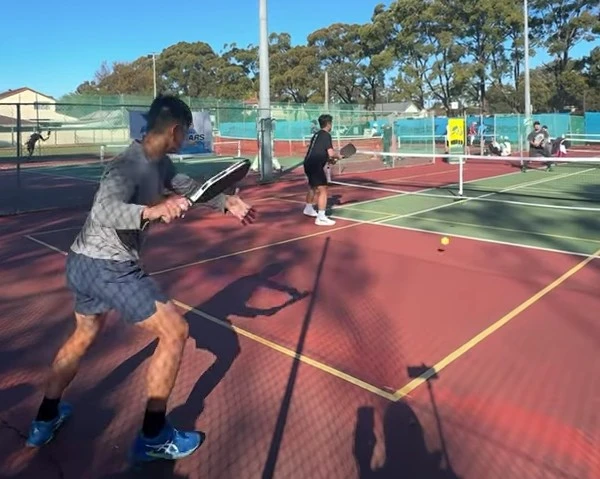
Beginners should prioritise forgiveness, structural stability, and manageable weight when choosing their first serious pickleball paddle. A larger effective sweet spot and moderate swing weight help reduce unforced errors, improve contact consistency, and accelerate the learning of basic strokes such as serves, returns, and controlled dinks.
These characteristics allow new players to focus on movement, positioning, and timing rather than constantly compensating for equipment limitations.
New players can also benefit from consulting structured pickleball beginner tips to avoid common purchasing mistakes, such as overspending on advanced performance models before developing a stable technique foundation.
At this early stage, comfort, predictability, and ease of control are far more valuable than specialised power or spin technologies.
Intermediate players typically begin transitioning toward graphite or carbon fibre faces to improve directional precision and shot shaping. As consistency improves, players start to notice how subtle differences in balance point, swing weight, and face stiffness influence tactical options such as controlled drives, third-shot drops, and angled volleys.
This is also the stage where players become more sensitive to how paddle responsiveness affects shot confidence during faster rally exchanges.
Advanced players often seek a pro pickleball paddle that aligns closely with their personal playing identity, whether that identity is built around aggressive baseline pressure, soft reset control at the kitchen line, or a balanced all-court style.
At this level, paddle selection becomes less about general forgiveness and more about fine-tuning feedback, touch response, and energy transfer characteristics to match individual mechanics.
Understanding where you realistically sit within this development progression helps ensure your pickleball paddle supports long-term improvement rather than forcing unnecessary technical adaptation.
Selecting equipment that matches your current capabilities allows technique to evolve naturally while maintaining confidence and consistency during training and competitive play.
For players entering the sport through social groups or community programs, bundled entry solutions can simplify the learning process. Pickleball starter sets typically include basic paddles and balls that allow immediate participation without complex purchasing decisions.
This helps new players focus on rules, movement, and basic stroke execution rather than equipment selection.
As players develop consistency and begin more structured practice, moving to an individually selected pickleball paddle becomes an important milestone. This transition allows players to optimise grip fit, swing weight, and face response based on personal comfort and playing style.
At this stage, players usually become more aware of how equipment influences control, confidence, and shot repeatability.
Starter equipment provides functional exposure, but long-term development depends strongly on paddle fit, balance, and performance alignment with the player’s evolving technique.
A gradual upgrade path allows Australian players to invest more strategically and avoid unnecessary replacement cycles while supporting sustainable skill progression.
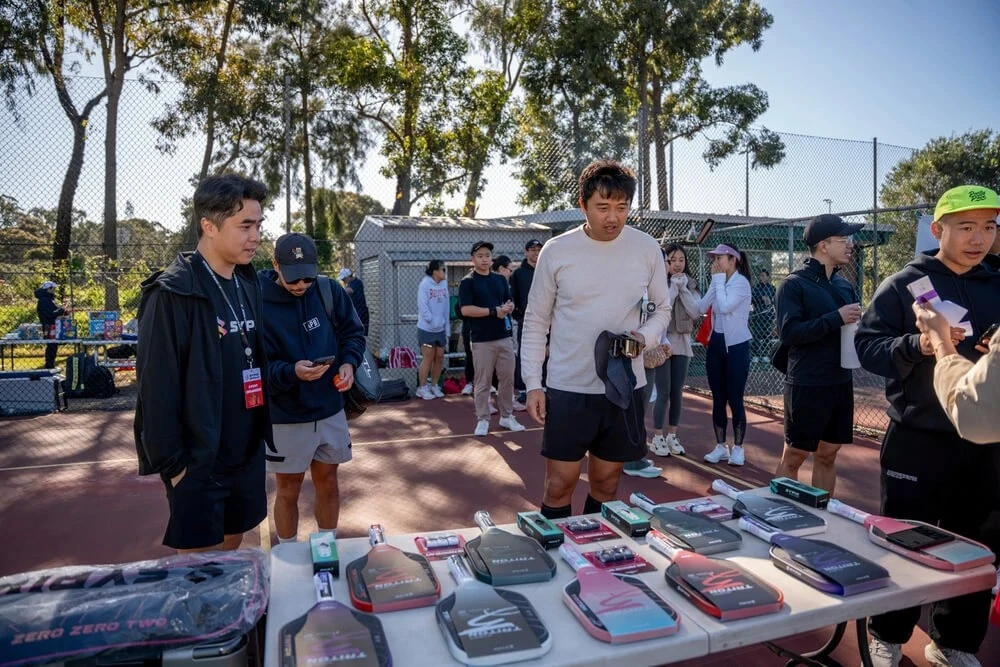
While casual and social play often allows flexible equipment choices, organised competitions and club events require paddles that comply with recognised technical standards.
This makes basic knowledge of regulations an important part of the purchasing process.
Understanding pickleball court rules and official paddle approval requirements helps ensure that your selected pickleball paddle remains eligible for club leagues, sanctioned events, and structured competitions.
This avoids situations where a paddle cannot be used during formal matches.
Approved paddles must meet defined criteria relating to surface roughness, size limitations, and construction specifications. Players who plan to compete regularly should always check certification markings before making a final purchase decision.
Compliance protects players from unexpected equipment restrictions during registration or match check-in.
In Australia, where many community clubs are increasingly hosting sanctioned tournaments, regulation awareness is becoming relevant even for recreational players.
A regulation-compliant pickleball paddle allows a smooth transition from casual social sessions to formal competition environments without changing equipment.
Purchasing channels have expanded significantly as pickleball adoption grows nationwide. Players can now buy pickleball paddles in Australia through specialised online retailers like Sypik Australia, club distributors, and brand-direct suppliers.
Specialised retailers provide better access to product specifications, sizing guidance, and compatibility advice. This is particularly valuable for players upgrading from entry-level equipment.
Sypik Australia supports players through direct access to detailed product information and structured performance positioning, allowing players to compare models objectively rather than relying on generic descriptions.
Before purchasing any pickleball paddle, players should confirm warranty coverage, availability of replacement accessories, and post-purchase support.
Explore the Sypik paddle range with Sypik Australia and find the paddle model that fits your training and competition goals!