No products in the cart.

Menu
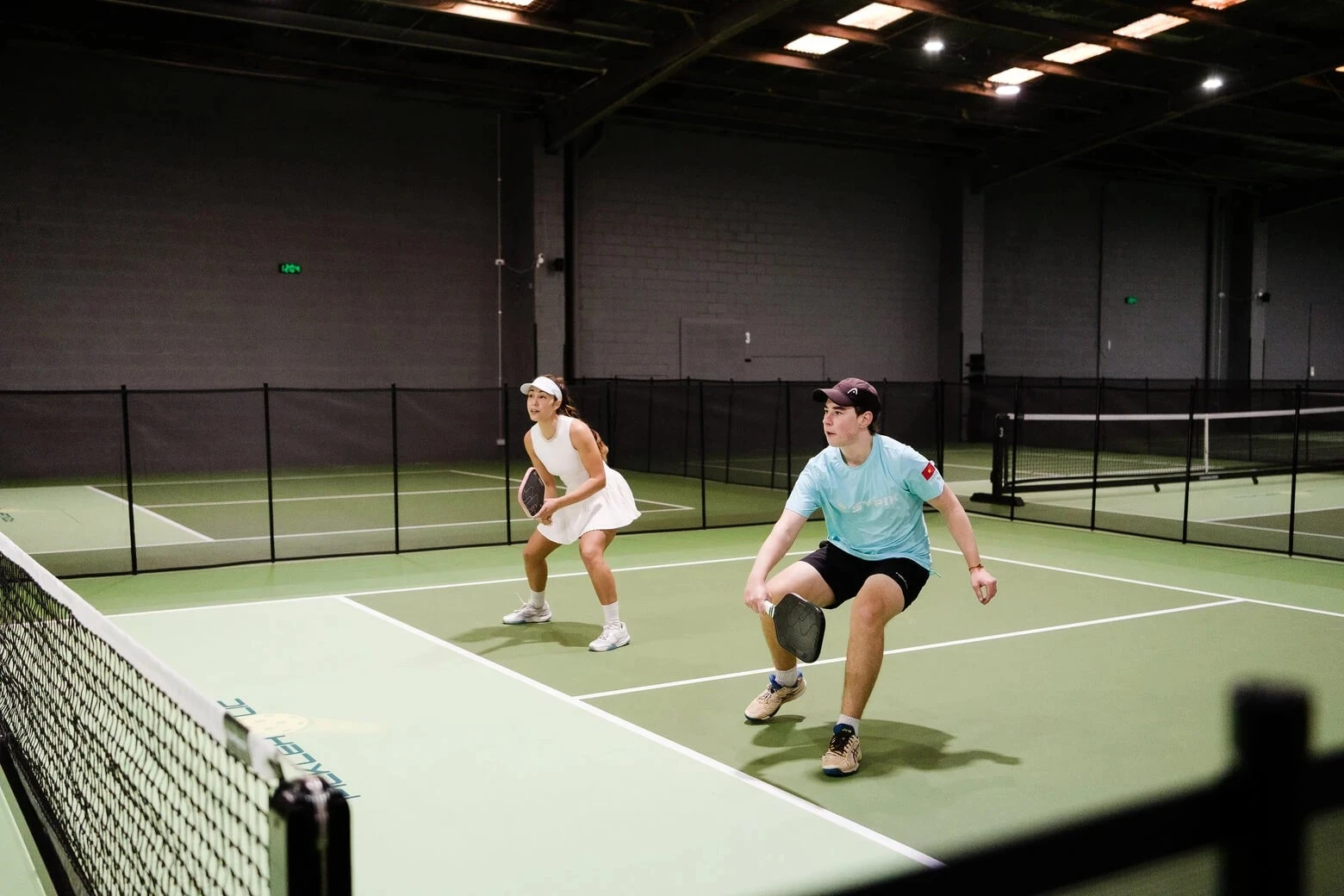
Across the country, indoor pickleball courts are becoming one of the fastest-growing playing environments for both new and experienced players. While outdoor courts continue to dominate overall participation, the rapid expansion of indoor venues reflects a clear shift in how Australians want to play—more consistently, more comfortably, and with fewer disruptions caused by weather and shared outdoor facilities.
In major cities and regional centres alike, indoor pickleball courts Australia-wide are now found inside community recreation centres, school and university sports halls, and privately operated multi-sport complexes. These venues provide stable lighting, controlled surfaces, and predictable scheduling, making them particularly attractive for organised sessions, coaching programs, and social competitions.
This guide explains how indoor pickleball venues are typically developed, where to find them, how they differ from outdoor courts, and how players can choose equipment and training environments that support long-term improvement. Throughout the article, practical recommendations are aligned with how Sypik Australia supports clubs and players across emerging indoor facilities.
The rapid increase in indoor pickleball courts reflects a broader shift in how recreational sport is delivered across Australia. Climate variability, rising demand for structured social sport, and the growing pressure on shared outdoor facilities are encouraging councils and private operators to invest in indoor venues as a more reliable participation model.
Indoor pickleball courts make it possible to run consistent programs regardless of extreme summer heat, heavy rainfall, strong winds that affect ball flight, or congestion at public park facilities. This reliability is a major advantage for clubs and venue operators seeking to maintain regular weekly sessions, coaching programs, and competition blocks.
Unlike outdoor public courts, which often operate on open-access and first-come-first-served use, most indoor pickleball courts rely on managed booking systems or club-based allocations. This structure allows organisers to plan structured schedules, allocate courts efficiently, and avoid last-minute cancellations caused by weather or surface availability.
For players, the primary benefit of indoor pickleball courts is continuity. Skill development in pickleball depends heavily on repetition and stable feedback. Indoor environments create predictable playing conditions that allow players to concentrate on technique, movement patterns, and shot selection without constantly adjusting to changing environmental variables.
From a participation perspective, indoor pickleball courts also improve inclusivity. Older players, families, and first-time participants are far more likely to commit to regular sessions when playing conditions are comfortable, safe, and reliable. This directly supports long-term community growth rather than short-term trial participation.
Sypik Australia supports many developing indoor pickleball courts programs by supplying equipment packages specifically configured for multi-court indoor environments and community-level clubs, helping organisers launch sustainable sessions and maintain consistent playing standards across venues.
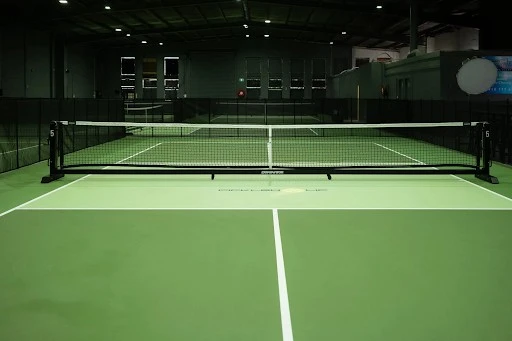
Most indoor pickleball courts in Australia are created by adapting existing multi-sport infrastructure rather than constructing purpose-built pickleball facilities. This shared-use approach allows councils and operators to introduce pickleball courts quickly, with minimal structural investment and significantly lower setup costs.
The most frequently used indoor pickleball courts include multi-sport recreation centres operated by local councils, school and university sports halls, privately operated indoor sports complexes, and community recreation hubs connected to aquatic or fitness centres. These locations form the backbone of indoor pickleball access in both metropolitan and regional areas.
Although hall size and layout vary, many facilities can accommodate between two and six indoor pickleball courts within a single space. Portable nets and removable court markings are commonly used so venues can transition efficiently between pickleball and other sports such as badminton, basketball, and futsal throughout the day.
This shared facility model significantly accelerates access to indoor pickleball courts across Australia, but it also introduces operational complexity. Court availability is usually influenced by broader venue timetables, school programs, and competing community activities, which can limit flexible play times.
Players looking for indoor pickleball courts should expect scheduled session windows rather than open public access, booking or membership requirements, and organised social or coaching sessions instead of casual drop-in play. These structures reflect the way most indoor facilities manage space across multiple sports.
Despite these limitations, indoor pickleball courts continue to offer the most stable and predictable playing environments in most Australian regions. Consistent lighting, protected surfaces, and reliable scheduling make them the preferred choice for regular training, structured social play, and organised community programs.
Covered pickleball courts create a noticeably different playing environment compared with outdoor park facilities. The absence of wind, direct sunlight, and background glare produces clearer visual tracking and more stable ball trajectories, allowing players to interact with the ball under highly repeatable conditions.
These stable conditions directly support the development of core pickleball skills, particularly contact consistency during dinking and soft resets, timing accuracy on volleys and blocks, controlled depth on third-shot drops, and positioning discipline near the non-volley zone. When ball flight becomes predictable, players can focus on execution rather than constant adjustment.
Because lighting levels and background contrast are more uniform on indoor pickleball courts, players can read the ball earlier and organise their body position before contact. Over time, this improves posture stability and reduces late contact errors and excessive wrist compensation that commonly appear in outdoor play.
For beginners and developing players, indoor pickleball courts significantly reduce cognitive load. With fewer environmental distractions, attention can be directed toward spacing, movement patterns, and tactical awareness instead of continually responding to glare, shadows, or wind changes.
From a coaching and program design perspective, indoor pickleball courts allow drills to be built around repeatable patterns and controlled progressions. This creates more reliable feedback within each session and supports clearer technical benchmarking over time.
For this reason, Sypik Australia consistently encourages new clubs and social groups to prioritise covered court sessions when launching player development pathways. Stable indoor conditions accelerate early learning, improve session quality, and help players build confidence before transitioning into more variable outdoor environments.
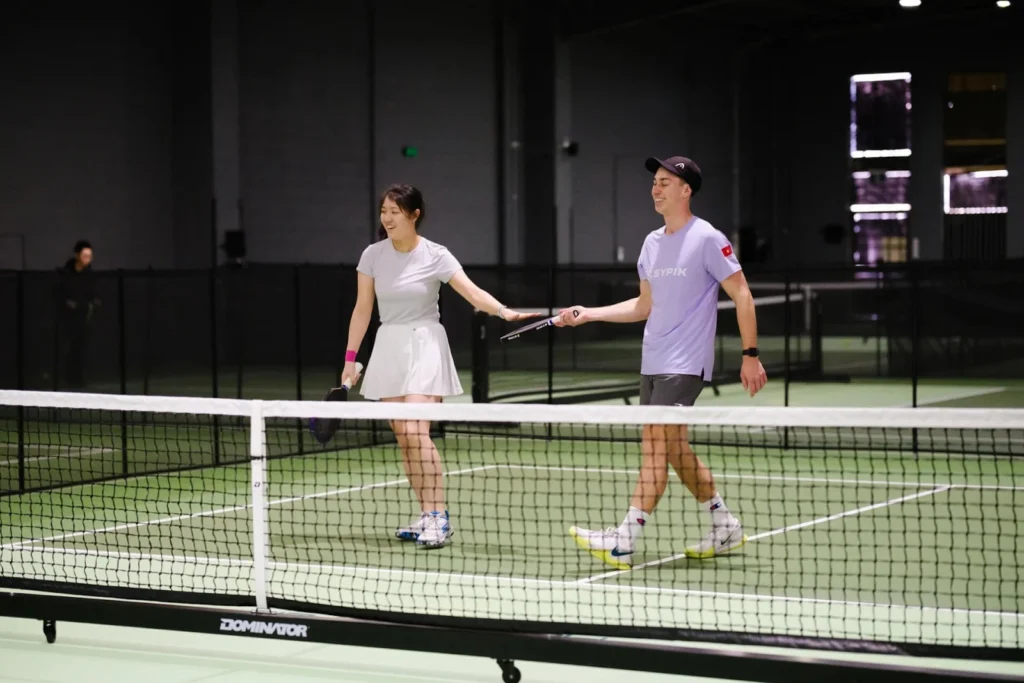
While lighting and climate are the most noticeable differences, the playing surface itself plays an equally important role in shaping performance on indoor pickleball courts. Most indoor venues use timber, vinyl, or synthetic multi-sport flooring rather than textured outdoor acrylic surfaces, which fundamentally changes how the ball interacts with the court.
Smoother surfaces on indoor pickleball courts typically produce faster horizontal ball travel after the bounce, lower friction during skidding shots, and, in some facilities, a slightly reduced vertical rebound. As a result, rallies often feel quicker, particularly during kitchen-line exchanges and transition-zone play.
Because the ball travels faster and stays lower after the bounce, players commonly experience a noticeable increase in rally tempo on indoor pickleball courts. This is especially evident during soft-game battles near the non-volley zone, where reaction time becomes more critical than on outdoor courts.
The feedback transmitted through the pickleball paddle also changes on indoor surfaces. Contact tends to feel cleaner and sharper because reduced surface drag allows the ball to arrive with more retained speed and less unpredictable bounce behaviour.
For players who move regularly between indoor pickleball courts and outdoor courts, this change in surface response can initially disrupt touch shots and defensive resets. Timing windows become narrower, and small spacing errors are more easily exposed when the ball arrives faster and lower than expected.
Paddles that offer moderate dwell time and balanced face response help players adapt more smoothly to indoor pickleball courts. In contrast, excessively stiff or strongly power-biased designs can exaggerate minor timing errors and reduce control when ball speed increases.
For players alternating between indoor pickleball courts and outdoor venues, Sypik Australia recommends balanced paddle configurations to preserve predictable contact behaviour across both environments and maintain consistency in touch, control, and defensive reliability.
In shared indoor facilities, pickleball court rules extend beyond standard match regulations and include venue-specific operating policies that are designed to manage space efficiently and maximise participation across different sports and user groups.
Most indoor pickleball courts apply a combination of operational rules such as structured rotation systems during peak periods, time limits per match, designated court allocations for coaching or competition sessions, responsibilities for setting up and packing down nets, and footwear or surface-protection requirements to preserve indoor flooring.
Because indoor pickleball courts are shared with other sporting programs, punctual court turnover plays a critical role in keeping venue schedules on track, and delays caused by slow transitions or equipment handling can disrupt multiple sessions across the facility.
Players who follow rotation procedures, respect allocated court times, and communicate clearly with neighbouring groups help maintain smooth operations and contribute to indoor pickleball courts being viewed as a reliable and well-managed activity within venue programming.
Sypik Australia regularly works with venue coordinators to assist clubs in developing practical indoor pickleball courts management processes and efficient equipment storage systems that reduce congestion and improve traffic flow during busy sessions.
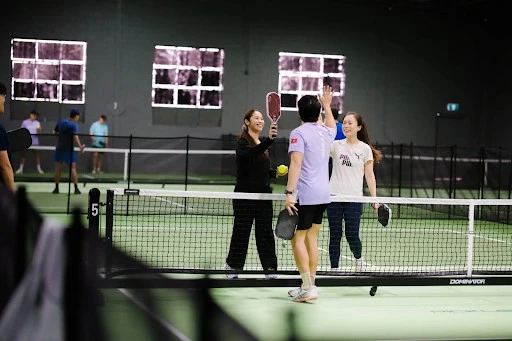
Selecting appropriate pickleball equipment plays a subtle but important role in maintaining consistent performance in indoor venues, where playing surfaces and environmental conditions create different stress patterns on balls and paddle faces compared with abrasive outdoor courts.
Indoor play benefits from indoor-rated balls that deliver more predictable rebound behaviour, combined with paddles that use durable face coatings capable of preserving surface texture over repeated contact. This combination helps stabilise ball response and supports reliable touch and spin on indoor pickleball courts during extended sessions.
Because indoor venues often encourage longer rallies and extended social or training blocks, comfort and predictability become more important than outright power, particularly on indoor pickleball courts for developing players who are still refining spacing, timing, and shot tolerance.
Inconsistent ball response can quickly undermine soft-game development and disrupt tactical structure during organised sessions, especially when practising drops, dinks, and controlled resets. Using indoor-appropriate balls reduces unnecessary bounce variability and allows players to maintain confidence in height control and landing accuracy.
Paddle face durability is also important in indoor environments, as repeated contact on smoother flooring can polish surface texture more quickly than outdoor grit exposure. Preserving surface response helps maintain consistent spin generation and predictable touch behaviour during prolonged training blocks.
Sypik Australia configures its equipment ranges to provide stable feedback across both indoor and outdoor environments, allowing players to transition between venues without needing to modify swing mechanics or compensate for inconsistent contact behaviour.
Extended indoor sessions are common in organised programs and social leagues, with two-hour booking blocks frequently scheduled at recreation centres. Over time, cumulative load on the forearm and shoulder becomes a limiting factor for consistency, especially for players who train or compete several times per week.
Well-balanced lightweight pickleball paddles help players manage fatigue across longer indoor sessions by reducing swing effort and improving overall handling efficiency. This directly supports faster hand reactions at the kitchen line, smoother defensive blocks and counters, lower muscular strain in the upper limb, and more stable posture as physical fatigue increases.
Indoor environments typically produce faster rallies and shorter reaction windows, particularly during close-range volley exchanges. Improved manoeuvrability makes it easier to control paddle positioning during rapid transitions, helping players remain composed when executing short volleys, blocks, and quick redirections.
Lightness alone is not sufficient for reliable indoor performance. Extremely light frames can feel unstable during deeper shots and baseline resets, especially when absorbing incoming pace. This instability often leads to inconsistent feedback and reduced confidence during defensive play.
High-quality lightweight designs preserve frame rigidity and surface response while improving handling speed. This balance allows players to maintain technical quality throughout long indoor sessions without sacrificing control or feedback during defensive situations.
Sypik Australia designs its lightweight paddle models to retain structural stability while reducing unnecessary swing weight, supporting players who participate regularly in indoor social leagues and competition programs where fatigue management and consistent feedback are critical for long-term performance.
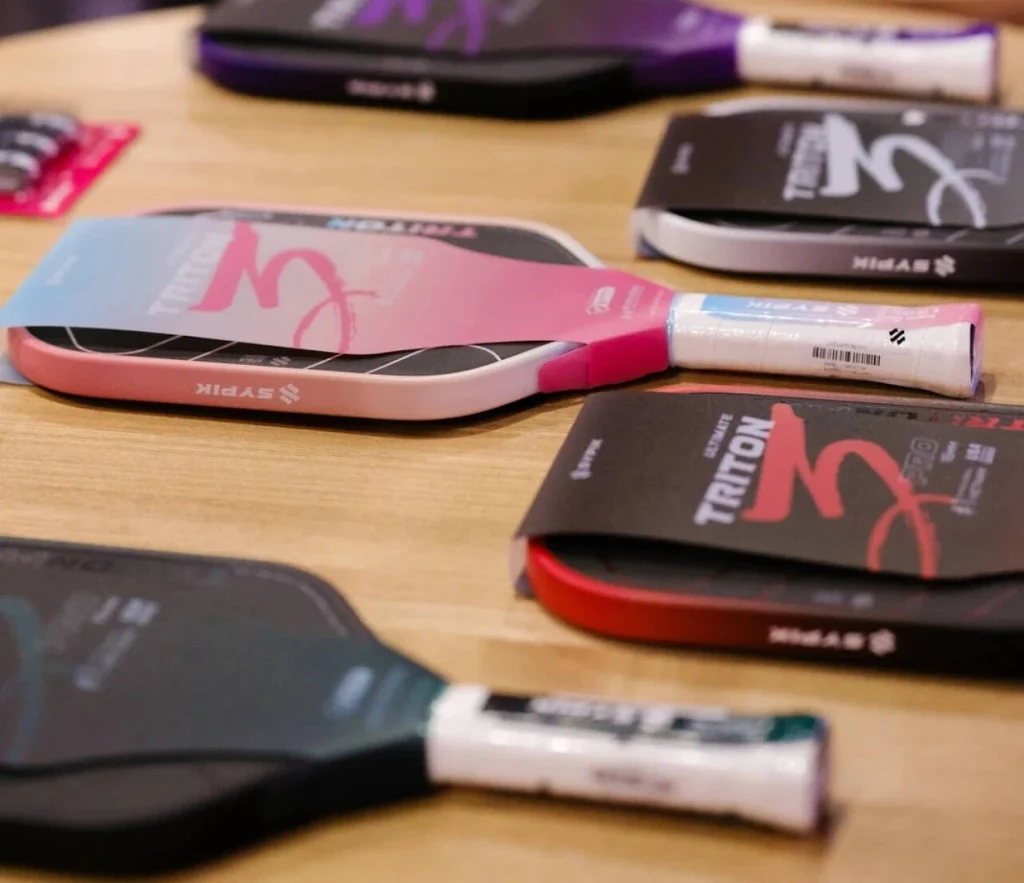
For players entering the sport through indoor programs, pickleball starter sets provide a practical and low-risk entry pathway. They are particularly suitable for school and university programs, community recreation sessions, workplace social sport groups, and family participation initiatives, where equipment is shared, and sessions are structured around group learning.
Well-constructed starter sets usually combine paddles with reinforced edges, indoor-appropriate balls, and basic protective carry solutions. This combination supports repeated transport between venues, frequent setup and pack-down, and consistent use across multiple participants during organised indoor sessions.
The primary learning benefit of quality starter kits lies in consistency rather than raw performance output. Durable construction and balanced paddle response provide a stable platform for early timing and spacing development, helping beginners build confidence during soft exchanges, controlled rallies, and basic positioning drills.
Low-quality kits often degrade quickly under repeated indoor use, especially when shared across multiple players. As paddles and balls wear unevenly, feedback becomes unpredictable, which slows technical progress and increases frustration among new participants.
Sypik Australia offers beginner-focused bundles designed specifically to support community and club-based indoor programs, allowing players to focus on learning and repetition rather than compensating for equipment limitations.
Combining suitable starter equipment with structured coaching and club-led pickleball beginner tips significantly improves early engagement, skill confidence, and long-term retention within indoor playing communities.
Finding indoor pickleball venues is often less straightforward than locating outdoor park courts, because many facilities do not list pickleball as a dedicated category on council or venue websites. In practice, most players discover indoor locations through local pickleball club pages, recreation centre program schedules, school and university sports departments, and community sport social media groups.
Because most indoor halls operate under shared-use timetables, session availability can change throughout the year. During school terms, competition seasons, or major community programs, pickleball time blocks may be reduced, relocated to different halls, or rescheduled to off-peak hours.
Before attending a new venue, players should confirm whether nets are provided on site, whether permanent or temporary court markings are used, whether bookings are required in advance, and whether casual drop-in play is supported. These operational details directly affect how smoothly sessions run and how suitable the venue is for social or training use.
Travel distance, parking availability, and public transport connectivity play a major role in whether players maintain long-term participation at indoor venues. Even well-run facilities can struggle to retain players if access becomes inconvenient for regular weekly sessions.
Sypik Australia frequently supports emerging indoor clubs by supplying equipment packages and assisting organisers with practical setup configurations that allow faster court transitions and smoother session flow during busy shared-venue schedules.
As indoor pickleball continues to expand across Australia, equipment consistency and operational reliability become increasingly important for both clubs and venue operators. The range is developed to deliver predictable feedback across indoor and outdoor playing environments, helping players maintain stable mechanics when rotating between different surfaces and venues.
Indoor programs often involve players training at different halls throughout the week. Sypik Australia focuses on paddle configurations that preserve balanced face response and stable feedback so players do not need to adjust swing mechanics each time they change venue or surface type.
Beyond equipment supply, Sypik Australia works directly with community clubs, schools and universities, recreation centre coordinators, and emerging social sport programs. This collaboration helps organisers select suitable equipment, plan court layouts, and manage session logistics for shared indoor facilities.
By assisting with venue setup, equipment selection, and player onboarding processes, Sypik Australia helps reduce early operational friction that often slows the launch of new indoor pickleball programs. This practical support allows organisers to focus on participation growth and session quality rather than equipment and setup challenges.
This community-focused approach ensures indoor pickleball venues are not only accessible but also sustainable and enjoyable for players of different ages and skill levels, supporting long-term development of the indoor pickleball ecosystem in Australia.
Not all indoor courts support development equally. Players should evaluate venues based on how well they facilitate the growth of core pickleball skills rather than simply availability. High-quality indoor learning environments typically offer:
Quieter sessions and structured time blocks provide greater opportunity for repetition and feedback. Overcrowded halls often limit rally length and reduce technical focus. Choosing an indoor court aligned with personal goals—social play, structured training, or competition preparation—shortens the learning curve and improves overall enjoyment.
Play year-round with confidence—discover indoor venues near you and equip your game with Sypik Australia, built for real Australian court conditions!